The 1960’s and into the 70’s was a time of great socio-cultural change – as you may have noticed at the time, or heard since. Even Fareham was affected – including Prices Grammar School for Boys. We were encouraged by the spirit of the times – and by certain seditious teachers in English, Drama and Art – to be creative. Music was the prime medium. The Beatles, Dylan, Paul Simon, and so on, meant that there was both a new permission and a new demand to be creative. In any case, it was obviously fabulous/groovy/far out to be able to play the guitar and sing – and there was also the chance that the girls we knew might think so too . . .
And so we learnt to play the guitar and to write songs if we possibly could.
Meanwhile, it was a well known fact that the Headmaster, Mr Eric Poyner, believed that the guitar was ‘the instrument of the devil’.
I can see his point. As a staunchly upper-middle class member of the Church of England, and of an older generation brought up in very different times, he must have been horrified when faced first with rock and roll and then by the libertine antics of The Rolling Stones and the aggression of The Who. Worst of all, the hippies : free love, drugs and long hair. Even the Beatles had become provocative during the second half of the sixties. They had grown their long hair even longer.
Meanwhile, as mentioned, a lot of us had learned to play the guitar.
And we had long hair of course.
*
The origins of the Prices ‘Folk’ Concert tradition are difficult to pin down because for all those involved it was a very long time ago. However, sometime in 1968 (probably) two sixth formers, Pat Gatland and Michael Knight – still with relatively short hair – managed to get permission to hold an evening Folk Concert. Presumably they had the help of one or other of the younger teachers. By that time, guitars and folk-style songs were even being heard in church ( Kumbaya, Shalom chevarim) – which must have helped. Everything was acoustic of course and the songs were both traditional and modern – but folk. There were even girl performers in the persons of Kathy Russell and a friend. Other concerts followed in May 1969 and December 1969 – both of which I attended. Among the performers, I recall Pat Gatland, Paul Hawes and Kathy Russell. The material remained acoustic and folky – although it seems there may also have been a rendition of the song ‘Cocaine’. . .
The next event was in February 1970. By this time Paul and Pat had moved on and the responsibility for keeping the ‘tradition’ going had been taken up by Chris Bard (Prices Head Boy, or soon to become so) assisted musically by Dave Cummins (Pricean) and Martin (Tink) Wood (former Pricean).
Here’s what happened: in January 1970, Chris and Co began to hire (or possibly just occupy) the Funtley Village Hall on Saturday afternoons in order to create and rehearse for a forthcoming event at Prices which was to be called The Light Show. In addition to serious rehearsal there was also general music, general hanging out and a pool table. Chris was good enough to give me a game of pool and wiped me out in about 60 seconds. When it came to the show itself, my important role was to assist on the lights.


The Light Show introduced two key innovations. One was to add poetry reading and comic sketches to the mix. Chris led in both. He wrote and performed obscure poetry and bizarre sketches involving, for example, woodpecker sound-effects and inappropriate French translations. The second innovation was more fundamental. Dave and Tink had obtained a P.A. system and an electric guitar. Andy Vores, meanwhile, was the enthusiastic possessor of a drum kit. Prices ‘folk’ concerts went electric – and this was only five years after Dylan had done the very same thing.
Meanwhile, the Saturday afternoon gatherings continued after the show and culminated on April 25th 1970 in an ‘event’ billed as TWEADIFARG ( The West End and District Folk Arts Revival Group), more music and hanging-out as I recall.
Another Prices concert/show/review took place on 6th November 1970. Dave, Tink and Andy played, but that’s all I can discover. There was then another Chris and Co event on the 10th and 11th December 1970 called Something to Remember. Music, poetry, sketches, surrealism. Dave, Tink, Andy and John Cameron played as Gigolo. I believe I may have done the lights again.


The acoustic tradition had also continued throughout these shows and one of the acoustic performers was Dick Hubbard, an English Teacher at Prices. He sang traditional ballads such as the beautiful ‘Geordie’ – while playing the guitar. (It was also he who reported to us Mr Poyner’s opinion of the aforesaid instrument).
Another performer was Nick Manley. He had become well known for a entertaining us with an anti-war song of the time and another involving Adam and Eve and a snake. At one or other of the concerts he was forced by audience demand to sing them again. Unfortunately, on this occasion, Mr Poyner happened to be listening at the back. “ I was suspended” says Nick “for singing the Fish Cheer/Fixing to Die Rag[1] and The One Eyed Trouser Snake. I don’t know which song caused the most offence.”
Chris and Co moved on. The next event – not until December 1971 – was back to the concert format. We called it Reflections of Summer. I say ‘we’ because now I was a sixth-former and organised the event together with Paul Gateshill and others. Perhaps that’s why our band – Lonene – had two slots in the programme while everyone else only had one ! Despite having moved on, Dave and Tink also played, so too did Dick Hubbard, Bob Gilbert (Head of Music), Nick Manley and Springwind – Nick Kahn, Mick Daysh and Dave Cledwyn. They also supported Andy Vores who had by then become a singer-songwriter-pianist-composer. In fact most of us were singer-songwriters – Nick Manley, Lonene, Morningstar, Springwind. We were creating and delivering original songs and music – and our audience was kind enough to respond with enthusiasm.


Next came Gromboolia, in March 1972, organised by Nick Manley and poet Alan Hill. The line-up was in part similar to the preceding concert but also included but also included many others, as can be seen from the programme :

Note that Nick and Alan – who would then have been in the Upper Sixth Form – organised a concert after we – who must have been in the Lower Sixth – organised Reflections of Summer. How the devil did we junior boys get away with it ?
Someone organised another concert in May 1973. It could have been me and others. I can’t remember. However, Lonene performed again – Paul Gateshill, Tracey Coles, Dave Cledwyn and myself. So too did Nick Kahn and Mick Daysh, but now with Jackie White (previously with Lonene); and the Andy Vores band, which incorporated folks promiscuously from other bands and elsewhere. Kathy and Rosalind Russell also made a reappearance after long absence. New performers included PINT (Paul McNeil, Ivor Bundell, Neil Pritchard and Tracey Coles) and Tarsus (Chris Nash, Mark Luckham and Andy Sandham ).
This concert was recorded. I had a cassette recorder which I must have put in front of the PA speakers and pressed play and record.
I also recorded part of the last concert I attended – after I had left Prices – in July 1975. This was, once again, of the highly promiscuous, now even further expanded, Andy Vores band – which included Ivor Bundell, Tracey Coles, Mick Daysh, John Cameron, Kate Burleigh and Liz Kearns – who both sang and danced. This recording is available now in digital format should you wish – for some reason – to hear it.
What happened to the tradition beyond 1975 I do not know. Prices was beginning its transition from Grammar school to Sixth Form College and times were [a-]changing. If anyone knows what happened next, please tell us.
*
An important NOTE : What I was unaware of at the time and has only recently come to light is that an event similar to those above took place one evening in 1969 – organised by a certain Spike Edney. His account, Price’s: A Musical Underground will be available via the Old Pricean’s website in due course.
Dramatis personae.

Pat(rick) Gatland moved to Australia, where he continues to write and perform in a folky manner together with his daughter Meg and others. Some of their music can be heard on YouTube https://www.youtube.com/channel/UCbx-GIVzm6rANKKQdtJaQ7g
 There seems to be a general consensus still that Dave Cummins was the most talented and creative guitarist of the time. He also had a wonderful Swedish Hagstrom acoustic guitar with a built-in pick-up – unheard of in those days. Early on he played with Martin (Min) Gateshill and was thereby an influence on Min’s younger brother Paul Gateshill. Paul, in turn, helped me learn how to play the guitar. That is, I had to strum chords for him for hours while he practised his magic-fingered lead. (Click on Dave’s guitar tab for more on the Hagstrom.
 Martin Wood – Tink – (Mar[tin K]enneth Wood) also played with Dave from early on. I was always puzzled that he played a nylon-strung Spanish Guitar rather than steel, but he was a great guitarist anyway. Both Tink and Dave were an inspiration and wrote some great songs together, and with Nick Manley too – see below. (Click on the Tony on Tink tab for more on Tink from his brother Tony).
Chris (No-holds) Bard was a general inspiration to us all – an impresario rather than a musical influence – although I’m told he played the saxophone. He was a huge creative talent – founder of and contributor to the ‘Black Lion’, organiser of ‘folk’ concerts/shows/’reviews’ and other events, Head Boy at Prices – when he seemed to take over morning Assembly, leaving the Headmaster and staff diminished in his wake.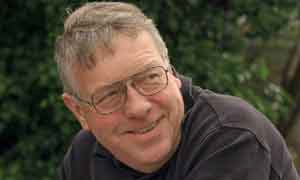
Unfortunately, Chris, Tink and Dave are no longer with us.
You can find an obituary for Chris at http://www.societyofoldpriceans.co.uk/pupils.htm
I met Tink again when we travelled up to London on the train together in the early 2000s. He was as delightful, gentle and kind a man as I had always remembered him. Then timetables changed and we no longer coincided. Next thing I heard, he had gone. Tink’s wife Jane (n. Suter) had also been part of the creativity – the sketches in particular. She is also gone.
Dave I never knew so well. He took to writing music for computer games before his health gave out on him.
Lamentations for each of them, and for the loss to us of their great talents.
 Nick Manley emerged for me as a solo performer – as described above. But he also played in Springwind and, writing songs together with Dave, Tink and others and forming the truly wonderful band Red Shift – https://soundcloud.com/theoriginalredshift Nick has since had a long and prolific writing and performing career in various bands and solo – much of it in France. More recently he has been generous enough to play together with myself, Mick Daysh (see below) and Chris Nash (ditto) under the banner of The Old Boys Band. Our oeuvre has included some Red Shift classics.
 Nick Kahn originally learnt to play classical guitar and this led him to write some beautiful instrumental pieces performed together with Mick Daysh and Jackie White on flutes. He has since gone on to write and perform fine songs, often accompanied by his daughters Anna on bass and Eleanor on guitar, and still by Mick Daysh on flute.
 Andy Vores was a prolific composer/song-writer on piano. Having first been a rock drummer, his piano-playing was often frenetic. In fact he sometimes played faster than his fingers could follow. The results were wonderful, and very different from the songs the rest of us wrote on guitars. He was also a showman and liked to organise large numbers of musicians, singers and even dancers on stage to help perform his creative complexities. He went on from Prices to study music composition and then moved to the US , where he became a successful modern-classical composer and Chair of Composition, Theory and Music History at the Boston Conservatory. http://andyvores.com/andyvoresbio.html
 Mick/Michael Daysh fluted with most of the above. It is always good to find someone who plays a proper orchestral instrument – more colours on the palette. Mick still flutes, but nowadays he also writes songs and sings, with guitar or keyboard and a band. Mick also plays with electro-acoustic classical guitarist Chris Nash.
 Chris Nash went on from Prices to take a music degree and to record instrumental music with Andy Sandham. He has also performed regularly in folk, rock and jazz bands. He also partakes of an instrumental guitar duet, ‘Nash and Thompson’, playing jazz, acoustic and classical pieces (https://soundcloud.com/search?q=nash%20and%20thompson
 Paul Gateshill has never stopped writing and performing – and playing some great lead guitar (owing to my strumming for him for hours you understand). He has also recorded two solo Albums/CDs (search Spotify, Amazon, YouTube) and been an essential contributor to the fourAlbums/CD’s produced by my brother Ivor and myself, Ivor and Kevan Bundell.

We three – and other friends – also recorded an actual LP in 1976 called Presence, which is now available as a CD :
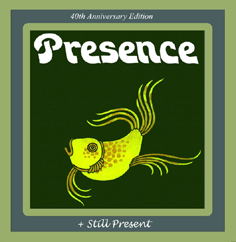
Details of our various albums – and some of our songs to listen to – can be found at www.bundellbros.co.uk . I particularly recommend you have a listen to ‘Mr Mitchell’s Angel’.
Paul Gateshill, Ivor and Kevan Bundell, Chris Nash, Michael Daysh, Nick Kahn and Nick Manley are now regular performers at Tanglefest – an annual Summer Garden Party and Concert event which happens at my place in Curdridge. Please send me an e-mail – kbundell@yahoo.co.uk – if you’d like to to be invited. All old friends/acquaintances/Priceans and everyone else are very welcome.
Another performer at Tanglefest has been Martin Gateshill – mentioned above as a friend of Dave Cummins and brother of Paul. Although he never played at one of Price’s Folk Conerts, he has interesting things to report of earlier days :
The very 1st electric band to come out of Prices was in 65 or 6. It featured me on Drums and I regret I can’t recall the names of the others. It was the creation of the incredible English teacher of the time, Mr Johnson. I think that was how I crossed paths with Dave and Tink a little later. The three of us formed a Trio called The Ash in 65/6 doing mainly The Who covers. I have a very scratchy recording of a couple of songs. Tink was lead guitar and vocals, he played a dreadful old Egmond guitar which cut his fingers to shreds the action was so high. Dave had a ‘catalogue’ Bass guitar and learned to play it as we went.
Between 1964 when we got started and 1968 we had written over 50 – 60 songs between us and did very few covers of any genre. Dave was easily the best and most creative musician of our cohort, a great friend and fellow traveller.
At that time [mid 60s] Dave and I were a Duo called Tog. I had an old Hoyer 12 string and Dave had a Hagstrom which I rescued. Neither of us knew anything about guitars at that time other than some were harder to play than others. How did I rescue it ? One weekend we were at Wickham at the home of a friend of a friend by the name of Frank Rumble. Frank produced the Hagstrom which had a huge body and really nice slim neck. Sadly the neck was completely snapped off just below the nut. I said I thought I could repair that and Frank said we could have it. I took it away to see what could be done. It was a perfect break, no material missing at all and would glue back almost invisibly. I did that, clamped it up using my dads tools and materials, left it for 24 hours, did a little cosmetic work and found it to be good as new. I handed it to Dave and the rest as they say, is history 😉
Nick Manley has more to say about the history of Dave’s famous Hagstrom :
I notice that the Hagstrom guitar is mentioned quite a bit in your scribing. I know some more of the story. Dave gifted the guitar to one Steve Denholm in the late 1970’s, in the Red Shift days. He, Steve and John Cameron worked at Polygraphic, a printing firm in Titchfield. The guitar was again in a bad way and Steve renovated it once more, stripping the varnish off and rendering to a blond finish, and resetting the neck. Once again a lovely instrument. Steve let me borrow it for a recording session when we were in Surrey Sound studios. After that we drifted apart but I ran into him again a few years back at Titchfield folk club. He was playing a Martin and is now a very good bluesy/jazzy player and I had to ask if he still had the guitar. Sadly no. He had given it to a friend who was learning to play, but he has lost contact with him. He said he would try and I am still waiting………..
*
PS Comments, corrections and additions to the above most welcome – kbundell@yahoo.co.uk
[1] Country Joe and the Fish’s anti Vietnam War anthem which begins ‘Give us an F ! . . .’