I first met Christian Aid in India in 1984. I was working for a local development NGO in Hyderabad, in the southern State of Andhra Pradesh. The Rural Development Advisory Service (RDAS) was a Christian Aid partner. It served as an intermediary between a group of ecumenical funders and small-scale, village level NGOs throughout the State. It recommended projects for funding and provided training, monitoring and evaluation services, enabling the funders to support small, grass-roots NGOs which they would otherwise have been unable to reach. A funders meeting was held while I was there, with Christian Aid, Bread for the World (BfW) and EZE from Germany and ICCO from the Netherlands. I met Sam Kenrick, Christian Aid’s Project Officer at the time. I also met Rainer Kruse from BfW, a powerhouse of ecumenical and NGO development efforts in India then and since. had come to Hyderabad to get married. My wife and I met as post-graduate students in Edinburgh and when she finished her studies and returned to India I followed. I had already spent a year in India living in a village in Southern Tamil Nadu.[1] It was that experience which motivated me to get involved in development work. Nonetheless, I otherwise arrived at RDAS a complete novice. I was soon educated. It was there that I was introduced to community organization, non-formal education/adult literacy, savings and loan groups and, above all, conscientization. Awareness-raising and collective action were the order of the day, both political and practical action, based on the writings of Paulo Freire and his work among the poor in Brazil. My job was to visit the local NGO projects supported through RDAS and write evaluation reports for the donor agencies. My guru was my colleague Sri TJPS Vardhan, who quickly brought me up to speed on both the good and the problematic, of which there were both.
In 1986, my wife and I returned to the UK and, after a spell as an NHS planner, I joined Christian Aid as Project Officer for North India, Bangladesh, taking over from Barry Langridge, who went to join the BBC World Service. This was at the end of August 1988 – immediately after Bangladesh had suffered one of its worst floods ever. Sixty percent of the country was inundated. For me, it was a baptism of flood. Guided by Barry’s notes and by Michael Hawkes, Head of Asia Pacific, and with the help of Liz Ansel, my Project Assistant, I disbursed tens of thousands of pounds to partner NGOs in Bangladesh for immediate relief work and then for rehabilitation efforts. I also stood up in front of the entire Christian Aid staff at the annual staff conference and told them what I was doing, never having visited Bangladesh nor knowing any of our partners.
I rectified that as soon as possible. I visited Bangladesh.
*
However, before I tell that tale, and tales of North India too, first something about how I found Christian Aid. I found it was right up my street. It was guided by a policy statement, To Strengthen the Poor, which focused on justice, poverty, empowerment and partnership, which was inspired both by liberation theology and by being part of the global family of churches under the umbrella of the World Council of Churches (WCC). At the same time, it was not confined to supporting church projects and partners, it also supported many secular NGOs. As a leading UK relief and development agency, it was well known to both the UK public and to the NGO scenes in both India and Bangladesh. I inherited a respected name, and a great responsibility.
I also joined an organization of welcoming and committed staff. Michael and Liz in particular helped me into my new role. Michael guided me on the policy front; Liz taught me the office systems and introduced me to our partners, at least in terms of names and recent history. She even typed all my correspondence and reports – it was a couple of years later before we all got desktop PCs.[2] The director at the time was Michael Taylor. He was a Baptist Minister. This helped me past his often intimidating demeanor (I only discovered his sense of humour later) as, despite later apostacy, I was brought up a Baptist.
Talking of apostacy, Christian Aid was, like the Church of England, a broad church. I was appointed not for my beliefs, but for my qualifications and experience, though with the requirement that I be ‘in sympathy with the aims and purposes’ of CA. That I was. Indeed, I had spent my teenage and university years as a member of an ecumenical youth movement – and done Religious Studies for ‘A’level. This background proved a huge plus working with ecumenical partners as part of the WCC family.
*
Project Officer for North India and Bangladesh.
My job as Project Officer was to manage Christian Aid’s relationships with our partners, that is, the NGOs we supported. This meant visiting North India and Bangladesh three times a year. I would visit partners’ projects in the field, though rarely for long enough, and then have business meetings at their offices to discuss project proposals and funding requests and helped arrange external evaluations. These proposals, agreed between partners and myself, I then presented to the Asia/Pacific Committee – made up of suitably knowledgeable friends of Christian Aid – for comment and, usually, endorsement. My fellow Project Officer colleagues did the same for their areas of course. One of them, soon after I arrived, made it clear to me that I was not to be as Barry had been. I gathered from this that he had tended to get his way by force of personality. No fear of that. I was respectful of Committee, colleagues and Christian Aid’s procedures from the start and no further word was said.
I couldn’t possibly get round everyone in the three weeks’ duration of each visit. This meant I had to prioritize and that visits to particular partners were not as often as they probably ought to have been. That issue was addressed later on by the creation of Assistant Project Officers which helped spread the load, and made partners happier too as they liked us to visit.
The standard pattern of a visit was this : I flew out of Heathrow in the afternoon/evening and hardly slept overnight. I arrived in the early afternoon and made my way, or was met by a partner and taken, to where I was to stay. I slept soundly until my alarm went off – in what was still the middle of my night. A partner picked me up and took me, very often, straight to the field. There I sat in village meetings trying desperately to stay awake. The second night I couldn’t sleep at all until about 6 a.m. Then I had to get up at 7.00. More fighting to stay awake. By the third day I had adjusted, at last, more or less.[3]
I then travelled from partner to partner, usually by 4×4 in Bangladesh, by jeep, by plane, by train occasionally, even by local bus, in India, where the distances between partners were greater and the villages often more remote. Sometimes I attended meetings together with other ecumenical funders and our NGO partners, mostly under the aegis of the World Council of Churches (WCC). After three weeks of visiting umpteen partners, I couldn’t remember who I’d visited to start with. Only my detailed and well written notes saved the earlier visits and discussions from oblivion.
When I got back from a trip I was allowed two, or possibly three days off. Actually, I would arrive at Heathrow early morning, take the tube to Waterloo and go in to the office to unload my burden of accumulated notes and other papers before heading back to home in Hampshire. I would then be back in the office on the third day, faced with a great accumulation of stuff to sort through, act upon and write up. Fortunately, my trusty Project Assistant was always there to help me.
These trips, plus the fact that I commuted nearly two hours each way and therefore got home late meant, I realized later, that I missed quite a bit of my children’s growing up, and dumped quite a lot on my wife, though she never complained. She understood that Christian Aid Project Officer for North India and Bangladesh was my ideal job and that I loved it. So I did.
Liz moved on after a while and others took her place, all efficient and dedicated to the cause. Still, none of them stayed long so perhaps I was impossible to work with ? I like to think not because Radha Wickramesinghe, who joined in 1990, stayed with me for many years, starting as Project Assistant before becoming Assistant Project Officer and only after I moved on to become a Policy Officer necessarily abandoning me – or the other way round. Radha was often my proverbial tower, supporting me when work, commuting and the other general stresses of existence came upon me. In fact, the creation of the post of Assistant Project Officer was a recognition that workload was forever increasing. After a while, a second Assistant PO was also appointed. Not that the number of partners was increasing – Barry had left me with a full load – but emergency funding, country policy papers, new internal systems and so on, added to what we had to get done. Actually, it was
sometimes Radha’s and my own fault. For some reason we spontaneously put time into coming up with the first computer-based project proposal system for the Aid department.
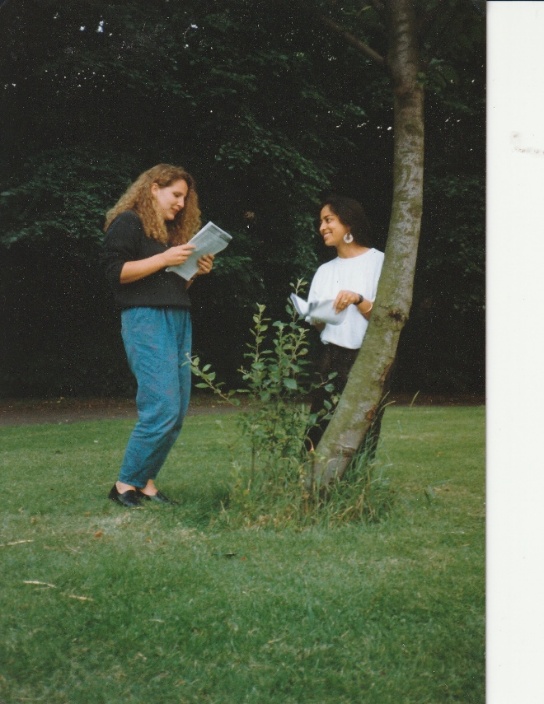
Mary M & Radha
By the time my time as Project Officer was up, we had a team of me, Radha and Mary Purcell, who had come to us from Freedom From Hunger, as Assistant Project Officers and the wonderful Mary Mathesson as our Project Assistant. However, it was not to last as changes took place within Christian Aid and we all moved on. More of which later.
*
Bangladesh.
On my first visit to Bangladesh, I not only met our partners, but also saw that the country was, compared to India, very undeveloped and that the majority of its population lived in obvious poverty. The recent floods had made the situation worse for many in the rural villages, as I noted in my first trip report :
‘My first impressions of poverty were confirmed when I saw and heard more through talking to partners and briefly visiting a few hamlets and villages. A vast number of people are landless and rely almost entirely on day labour in the fields for their income. This is highly seasonal employment in normal times. On flood affected areas where crops have been destroyed there will be no such employment for three or four months. Not only are many people landless, but they also have few other assets such as goats or poultry. Their housing is often minimal, made worse by the flood . . . but providing little protection against rain and the chilly temperatures of the winter season even when undamaged.’
I also noted how few pucca buildings there were even in the rural towns we passed through. Mostly it was rows of shanty huts of rusted corrugated iron, wooden planking and flattened tin cans. The roads were mostly rough and narrow with little motorized traffic except buses and lorries – and donor agency and NGO 4x4s.
The scene in Bangladesh was rather different from what I’d been used to in South India. In India there were government schemes of all kinds intended to help the poor and the main task was to fight to get access to what the poor were officially entitled to. In Bangladesh, there were little or no government schemes and everything was provided by often large-scale NGOs. Some of our partners were among these significant players.
Among the most significant was Gonshasthaya Kendra (GK) founded and led by Dr Zafrullah Chowdhury, the recipient of both national and international awards for his work in training local women as health workers taking basic health care to rural areas, and for the establishment of a national drugs policy, along the lines recommended by the WHO, but much opposed by the international pharmaceutical industry. GK also established a factory to produce generic basic medicines which had previously been too expensive for poor people to afford. Christian Aid funded GK’s Women’s Centre (Nari Kendra) which, among other things, taught rural women to drive – unheard of previously – and to operate ride-in agricultural rotavators. We also funded GK with substantial relief and rehabilitation funds when flood and cyclone struck.
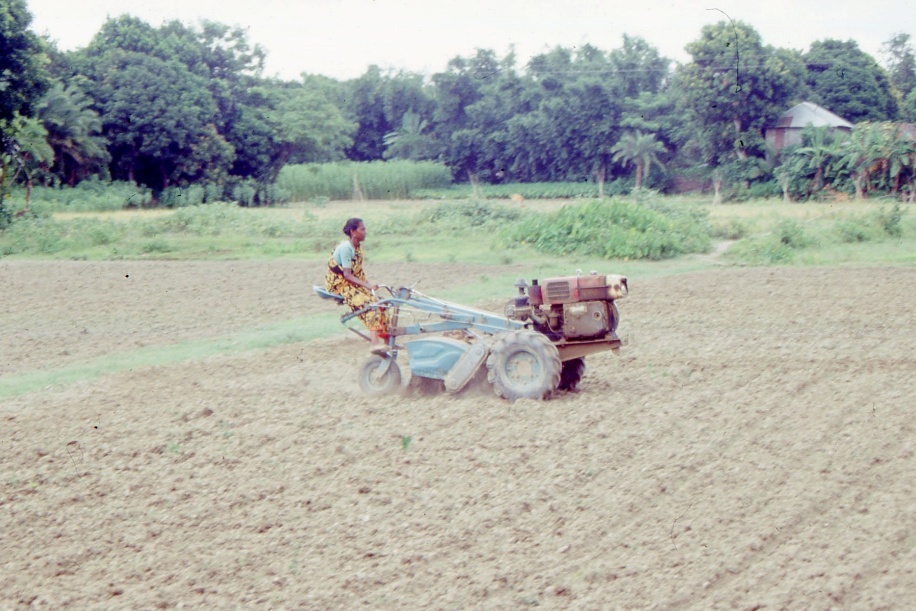
The day before I met Zafrullah I was told, at length, by a friend from another agency, what a wonderful person Zafrullah was. Indeed, possibly too wonderful it seemed to me. I therefore first met him with a cautious, not to say negative, frame of mind. However, my friend was right. He was delightful. It was clear in a moment that he was a ‘character’ and it soon became obvious that we would get on. We met in the GK ‘office’, a huge hall in the center of which stood an great area of tables piled high with documents and folders. This was GK’s filing system. Still, somehow, particular files could always be found.
Zafrullah was from the generation that experienced and indeed did their bit during and after the Bangladesh Liberation War in 1971. I believe he abandoned his post-graduate medical studies in the UK to return home to help on the health front. Many of the large NGOs in Bangladesh were established in the period after the war, when the need for reconstruction and development was enormous, and they were still led by their original founders. I soon became aware of the fact that I was a young sprout from a comfortable country negotiating and assessing the work of men (and some women) who had lived through troubled times and who had devoted their lives to helping their new nation and its poverty and disaster-struck people. They were kind enough not to mention this disparity and treated me with warm hospitality and friendship. Indeed, a number of them became my very good friends.
Some of them also provided me with wonderful food. Bangladeshi cuisine is, I discovered (and continue to assert, despite my wife being from South India) the best in the Sub-Continent. I enjoyed in particular chingri, a giant prawn fished from the multitude of tidal rivers which flow through delta Bangladesh. Unfortunately, chingri are no more. Or at least, they are no longer available in the market at an affordable price. They seem to have been fished to culinary extinction. I discovered this, much to my disappointment, when my wife and I visited Dhaka in 2019 – the first time I had been back to Bangladesh in twenty-three years. I also met Zafrullah again. We had dinner at his house together with his wife, Shireen, and my friend and former partner Jahangir. Zafrullah was not well by then, and he passed away in 2023. It was an honour to have known him.
Another friend no longer with us was Ataur Rahman, founder of Gono Unnayan Prochesta (People’s Development Efforts – GUP). The name was chosen to emphasise that development could not be achieved by external plans, but by local people’s own often experimental efforts. (GUP was established in 1972-1973 with the aid of Quaker Service Bangladesh, based in Rajoir, in Madaripur District. Like other NGOs it promoted a range of development activities, and was able to respond to disasters in its own area and beyond. GUP was funded – among others – by a consortium of the Ecumenical doners, BfW, EZE, ICCO and CA. Following the floods GUP, like other partners, obtained significant amounts of funds – not only from us – for relief and rehabilitation work, which added considerably to their size and area of work. This was to be a recurring pattern among many Bangladeshi NGOs over the next years as floods and cyclones drew them to expand their services to new and needy areas.
I supplied GUP, at Ataur’s request, with gladioli bulbs, which I bought in Calcutta airport. Growing cut-flowers to sell in Dhaka had proved a useful local income-generation activity for them. This was a very modest business, but the matter of funding NGOs to set up businesses to raise income for their work was always an issue in my mind. Christian Aid had once helped fund what is now the biggest NGO in the world – the Bangladesh Rural Advancement Committee (BRAC) – to set up a printing press. I think we may have also helped set up GK’s pharmaceuticals factory. Of course, these initiatives contributed to development as well as operating as businesses and income-earners for the NGOs, but coming from my South India background of small NGOs, I was somewhat of the view that the business – and indeed the expertise – of development NGOs was to implement community-based development projects, or, at least, that it was Christian Aid’s business to fund such community projects rather than partner’s attempts to be self-financing. This was, undoubtedly a rather donor-agency oriented point of view.
GUP’s HQ was, I like most NGOs – in Dhaka. Rajoir was on the other side of the Padma River, the main channel of the Ganga through Bangladesh, and very wide. A that time, it could only be crossed by ferry – old ships donated by Denmark, and on which I realised I had travelled on before when I had visited Denmark in my student days. Only then they had been in fine condition and run in an organised fashion. Now they were old, rusty and all was chaos – especially when it came to loading and unloading vehicles. Those vehicles attempting to load hardly waited for those on board to disembark. In fact, on one occasion, they didn’t. A lorry and a bus sat on the ramp for an hour or so while neither driver would give way to the other and no one seemed able to sort it out. We just sat it out in our air conditioned 4×4 until, somehow, it was sorted.
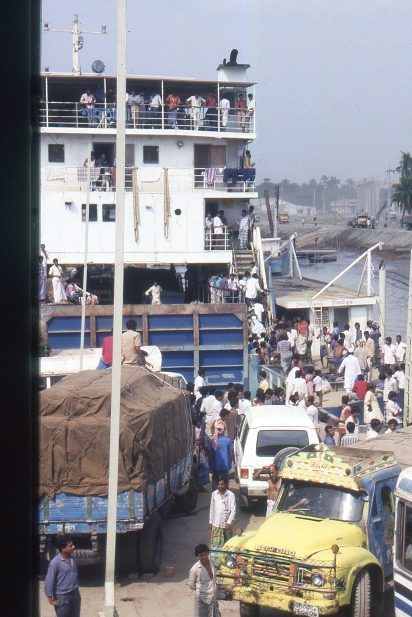
This particular 4×4 had been paid for by CA, I believe. Barry (my predecessor) had suggested they buy a Land Rover– i.e. buy British. Unfortunately, Land Rover were not organised enough to supply one. Only the Church of Bangladesh (COB) had a Land Rover (long wheelbase, Defender) gifted by the British High Commission I think. The COB driver loved it. Where they got spare parts from was another issue.
Ataur quickly became a good friend and advisor. On my first couple of visits I gratefully accepted Ataur’s hospitality and stayed with GUP when I was in Dhaka, although I was careful to see as many other partners as possible both in Dhaka and in the field. However, this was not careful enough and some other partners complained that GUP was getting more than its fair share of my time. After that I joined others of the visiting ex-pat community at the Ambrosia Guest House.
Before I forget, I must just mention that GUP meals, whether in Dhaka or in Rajoir, were the finest of all.
I last met Ataur in hospital in Leeds. He had been visiting Quaker and other friends in the UK when a hidden tooth abscess reached his brain. He did not recover. Fortunately, his wife, Dolly, was able to be with him during his last weeks. GUP’s work continues, I am pleased to report, despite Ataur’s having gone.
The Church of Bangladesh (COB) was one of two Ecumenical, that is WCC-related partners in Bangladesh. The other was the Christian Commission for Development Bangladesh (CCDB). The former was Anglican and Presbyterian in origin – the COB is a member of the Anglican Communion. The latter arose out of an international Ecumenical/WCC initiative following the Liberation War. For whatever reason, the COB did not get on with CCDB. I never enquired too closely, but my understanding is that Bishop Mondal of COB and Susanta Ahdikari, Executive Director of CCDB, came from the same village, or thereabouts, but while the Bishop was an Anglican, Mr Adhikari was a Baptist. Beyond that, I think the COB had not been happy to join a development organisation – an NGO – separate from the church’s life, structures and responsibilities as a whole. In any case, while CCDB was the main ecumenical /WCC partner in Bangladesh, I was ‘appointed’ by the Asia Secretary of the WCC, Dr Park Kyung Seu[4], to look after the COB on behalf of the Ecumenical family. It was not always easy.
For a start, it was not easy to reach them at St Thomas’s Cathedral in the middle of old Dhaka, sat in a people-carrier van and surrounded by a sea of hardly moving cycle rickshaws. And then, having got there, the Bishop and I did not always see eye to eye. The Church had inherited both schools and hospitals from its missionary foundations and they needed funding. I saw Christian Aid’s role as being one of funding the church’s more directly development projects or programmes, which we were already supporting in a number of dioceses. In my defence, others, such as SPCK, were helping with the schools. In the Bishop’s defence, the schools (and hospitals) were important not only to the communities they served, but also to the COB’s reputation in the wider Muslim society and with the Government. While the Church concentrated its project work where its congregations lived, it also reached out to the local population in general – especially when floods or cyclones occurred – both out of conviction and perhaps of necessity. In a predominantly Muslim country of over a hundred million, the total membership of the COB was around 20,000. I felt a great sympathy for the Church having been left by post-colonial history as such a small community. Christians as a whole in Bangladesh were a tiny percentage, and I often wondered if the COB might not be better off joining the Catholics . . . I never said so, of course, nor did I mention that I was an apostate. I especially didn’t mention that I’d been brought up a Baptist.
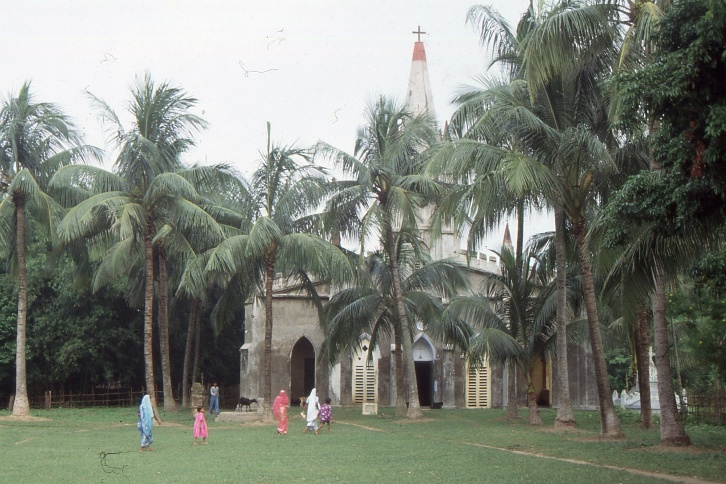
I visited a number of the COB development projects during my tenure. At one, I had an interesting conversation with a young priest on the subject of community organisation and awareness-building. It was not possible, in the political climate of the country, to be ‘radical’ as NGOs often were in India, and projects had to concentrate on addressing practical needs. This was especially true for the COB. In fact, it was also more generally true for the NGO scene as a whole given the paucity of Government programmes. The NGOs had to provide a wide range of inputs and services to help meet the needs of the rural poor. However, many of the NGOs did particularly focus their efforts on women – especially, though not only, through forming small savings and loan groups and providing microcredit.
The COB had some committed and experienced project staff, but everywhere I went I heard complaints that everything was too controlled by the Bishop – especially the disbursal of project funds – and that salaries were too low. However, these were not matters I could interfere in, and in any case, I understood that the Bishop was juggling a wide range of church activities and expenditures and that he could not allow salaries to get out of line among the church’s various staff.
I also understood that the Bishop believed in a simple life. Perhaps that was another reason he did not want to be part of CCDB. They, like other large Bangladeshi NGOs, had a substantial and modern HQ in Dhaka and operated as a professional and focussed development organisation. I visited them in Cox’s Bazar on one occasion. They were there in response to a cyclone situation, providing relief and rehabilitation support on the badly hit islands just off the coast. GK were there too. On one day I went with GK in a local wooden boat with its slow-chugging diesel engine. The next day I went with CCDB in a twin outboard speedboat and reached the island in a fraction of the time.
Both GK and CCDB – and many others – were building cyclone shelters –reinforced concrete structures on stilts. There was a standard design available, but GK had designed its own arrow-shaped shelters pointing into the direction of the prevailing wind. Christian Aid provided funds towards these shelters both from emergency appeals and from grants from the UK Government. Traditionally, villagers built earth mounds on which to sit out cyclone winds, floods and high tides, or people tied themselves onto trees for the duration of the storm. But lives were always lost. I was told that sometimes women were not allowed to leave their huts for cultural reasons and were drowned. The cyclone shelters have subsequently proved life-savers.
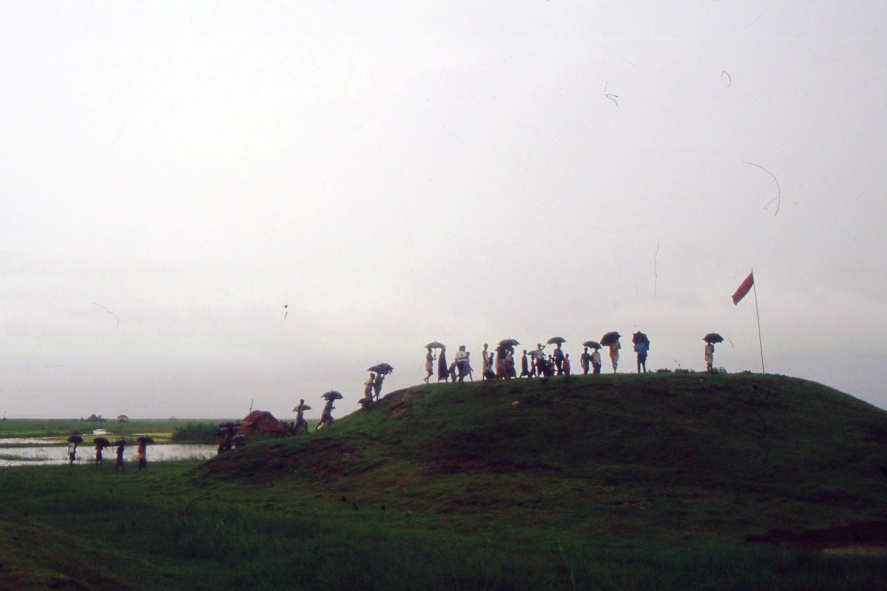
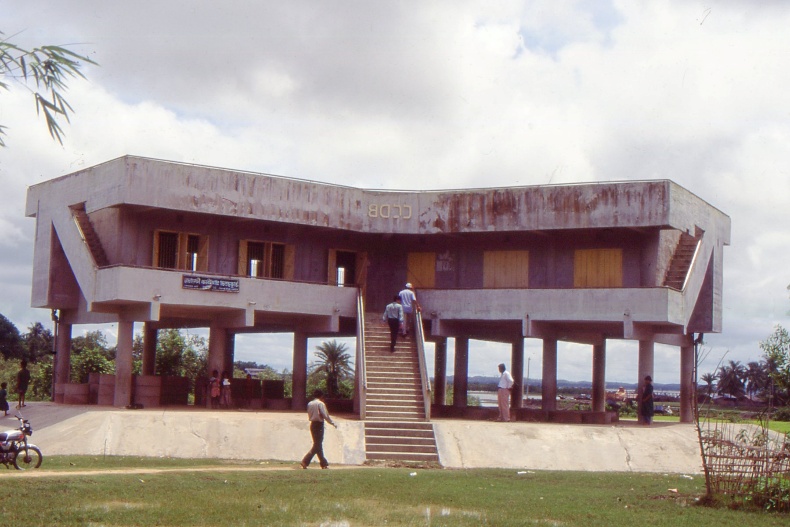
This was the only occasion I visited CCDB in the field. While I looked after the COB, other members of the WCC Round Table of funders visited CCDB. We met two or three times as a Round Table during my time, when I got to know the Director, Susanta Adhikari. He was a delightful man who spoke gently through a constant smile.
It was a particular pleasure to be part of the WCC family, working with my equivalents from other ecumenical donors, with Park Kung Seu, and with the church-related partners. At the same time, it was equally rewarding to work with the secular partners – sometimes together with the same donor colleagues. Christian Aid was valued by both and I inherited the good relationships my predecessors had created.
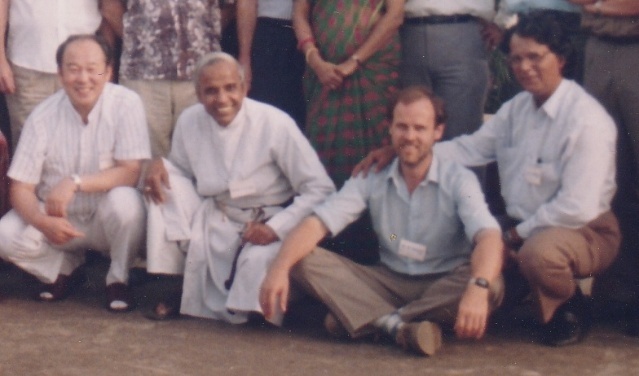
Park Kyung Seu, Bishop Mondal, me, Susanta Adhikari
It was not all smooth sailing however. One of our partners, Nijera Kori (We do it ourselves) was particularly fond of my predecessor Barry who had spent some days in the field with them on one of his visits. I never managed to fill his shoes I fear, although I did visit them too, but only for a day at a time. Nijera Kori’s work and philosophy was particularly in line with Christian Aid’s values and policies:
“In 1980, Nijera Kori emerged when activists from some NGOs in Bangladesh recognised the importance of empowering marginalised communities. They saw that patriarchy, poverty, and discrimination were rooted in unequal distribution, power dynamics, and social norms—not due to a lack of resources, as was commonly believed. Rejecting dependency-inducing approaches like microcredit, and service provision, Nijera Kori instead supports rural women and men to form autonomous landless organisations to assert their own collective agency.“[5]
Nijera Kori was led by the formidable Kushi Kabir. She later made a very successful partner visit to the UK where she visited Area Staff and supporters throughout the country, but earlier on, I was not in her good books. Barry had started funding a small NGO which had been formed by breakaway, ex-Nijera Kori staff. Apparently they were still working in Nikera Kori’s patch. This was not acceptable. In fact Kushi announced that she would report Christian Aid to the Government NGO Bureau if I did not make them move. I made them move. On another occasion I was visiting with Paul Spray, Head of Aid, when she asked, ‘Why don’t you just give us the money and go away ?’ She knew it was impossible of course, but I had some sympathy for her position.
I also inherited another ‘breakaway’ partner from Barry – who had been deliberately trying to recruit new and smaller partners to broaden Christian Aid’s programme in Bangladesh. Fortunately, this one caused me no problems – although the partner, MAUCHAK, suffered considerably– but it illustrated a feature of the NGO scene in the country. It was dominated by large and long-established NGOs who did not welcome others in their areas of operation. In this case, the partner had, I think, been recommended to Barry by Zafrullah, and he continued to support them within the higher echelons of the NGO scene. Zafrullah also raised no objection to Barry’s funding of another breakaway – from GK itself – even though they took GK’s initials with them, calling themselves GKT, Gono Kallayan (People’s Welfare) Trust.
I visited one of GKTs villages once after a tornado had struck. What had been the corrugated iron roofs of the village huts had been gathered into a pile. They had been crushed and crumpled as if they were paper.
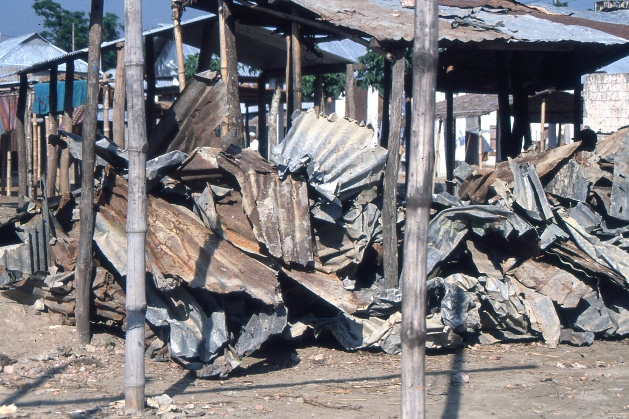
Concerning the NGO scene, I soon came to understand that Bangladesh was like one big village. Everybody knew everybody else, and everyone else’s business. This was also true of the international aid agencies – both NGO and Governmental – that resided in Dhaka. Everyone had an office in Bangladesh. It was a buzzing, gossiping, and certainly at government to government level, pressuring community of ex-pats armed with huge budgets and fleets of 4x4s. Which is not to say that they were not doing their best for a young and backward country ruled at that time by a General. I actually met very few of them, but I gathered that Christian Aid’s support to our larger partners at least was well known.[6] I was repeatedly challenged as to why Christian Aid had not got an office in Dhaka, and complained to that I had not visited non- ecumenical co-funders of partners such as GK and FIVDB.
I did visit a UK ODA representative one evening at her substantial residence in Dhaka. In fact, I had earlier applied and been interviewed for the job she was now doing. It would not have suited me. ‘Why don’t you open an office in Dhaka?’ she asked. I explained about Christian Aid’s policy of working with local partners, particularly through local church-related NGOs. I got away with it despite all our major non-church partners like GK, GUP and Nijera Kori. ‘Over my dead body’ I thought, but kept quiet.
I inherited one partner that was neither new nor set up after the Liberation war. The Kumudini Welfare Trust had been set up as long ago as 1947, founded by a wealthy Hindu businessman, R P Shaha :
“Between 1938 and 1944 R P Shaha had set up a free dispensary, a 750-bed free hospital named Kumudini Hospital. He established Bharateswari Homes, Kumudini Girls’ College and Debendra College. In 1944 he donated an amount of Rs. 2,50,000/- to the British Red Cross. R P Shaha and his only son were abducted by the Pakistan Army and their collaborators in 1971. They never returned. Along with the hospital, the Trust now runs a Women’s Medical College, a Nursing School and a Nursing College. Funds required for running the welfare activities are obtained from the income generating units of the Trust like jute press and warehouse, garments industry, pharmaceuticals, river transportation, handicrafts etc”.[7]
Kumudini – the Trust and the businesses – were now run by Mr Shaha’s daughter, the redoubtable and delightful Mrs Joya Pati. Christian Aid was funding a garment-making training programme for women.
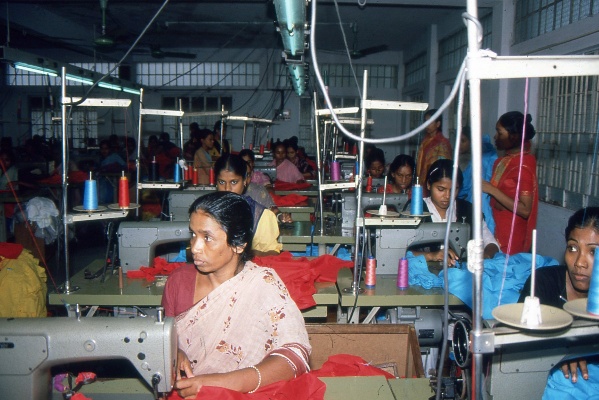
The garment industry was up and coming at that time and unusual in providing employment opportunities for poor women. The pay was low, but the Bangladeshi NGOs as a whole warned the international agencies off from campaigning on the issue because of its benefits, both to the country’s economy and to women. Mrs Pati seemed to take a shine to me, mostly because I was married to a Hindu I suspect. She even visited us at home on one of her trips to the UK to meet my wife. She also took me to see the Kumudini Hospital and colleges. We were driving across the characteristically flat and, at that season, dry Bangladesh countryside when a vast structure came into sight. It looked like a great fort. We came up to its nearest, towering wall and drove down its length. When we reached the end, the wall turned ninety degrees and we were looking down another immense length of wall receding into the distance. Somewhere there was a way in and we entered an oasis of green around a huge tank (i.e. a rectangular pond), busy with both people and buildings. Mrs Pati also took me to see the enormous jute drying sheds at Narayangunj, the port of Dhaka. This, and river transport, were the businesses in which her father had first made his fortune. It seemed everything about Kumudini – except Mrs Pati, who was quite short – was on a grand scale. The garment training project was of more modest proportions, but contributed, I believe, to greater things.
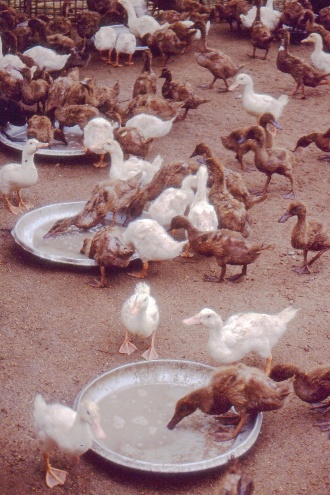
When I joined CA, my Project Assistant, Liz, was finishing a project involving ducks. She had been responsible for the arrangements for the export of some hundreds of specially bred, white ducklings from Cherry Valley Farms in Lincolnshire to our partner Friends in Village Development Bangladesh (FIVDB). FIVDB had developed out of work by International Voluntary Services (IVS) in Sylhet, in the North-East of the country, after the War. It was led by Zahin Ahmed, a simple but highly cultured man from a wealthy local family. He came to stay with my wife once and regaled us with Urdu poetry of which I understood not a word and my wife only understood a few. But you could see his passion. He was similarly impassioned about helping others. FIVDB was committed to community organisation, literacy, conscientisation and to working with women. It was also into ducks. I only managed to visit FIVDB in Sylhet once. As in other parts of the country, there were ducks everywhere in the flooded paddy fields. Only elsewhere the ducks were generally brown. Here they sported numerous patches of white – inherited and spread from the superior Cherry Valley ducklings.
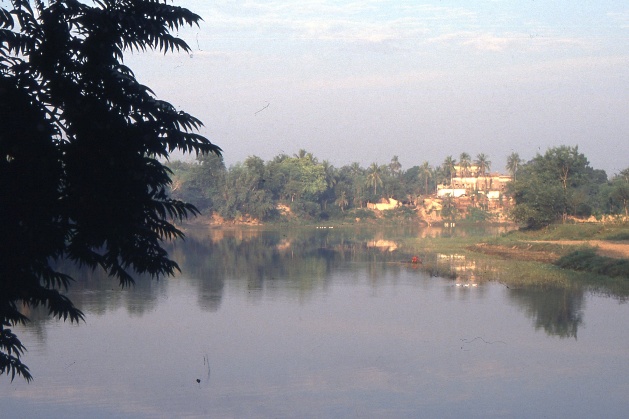
Sylhet was the only place I visited in Bangladesh where I met hills. The area is famous for its tea gardens, covering the slopes and over which rise to the North of Sylhet city. Most of the country is flat. Very flat. Personally, I like my horizon to undulate a bit, so Sylhet was a treat. Nonetheless, other parts of the country are also beautiful. Bangladesh is famously a land of rivers, especially the Ganga and the Brahmaputra/Jamuna, which combine to form the Padma, and the Meghna which joins them. Meanwhile, more than a third of the country is made up of the vast delta of these rivers, and a substantial proportion of the poor lived there. Whether on the banks of the rivers or on the islands of silt in the rivers, land was always being eroded and deposited. There were customary ways of moving to new land when previous land was lost, but, combined with seasonal cyclones blowing in from the Bay of Bengal, and owning no land, life and livelihoods were precarious.
Being a delta, here were no local stones available for construction. Instead, there were bricks, mostly used to construct roads. Sometimes the bricks were laid whole along the top of embankments, or they were broken up by gangs of both men and women, with hammers, and used as rubble to create the base for a modest road or path. The bricks were made from the delta silt. Huge, rectangular stacks of sun-dried bricks were built, with a steel chimney on the top and a fire lit in their interior. I was once persuaded to climb to the top of one of these stacks as it burnt. My guide lifted a steel lid so that I could see the fires of hell raging below.
Ironically, the most beautiful, or picturesque, parts of Bangladesh I visited were mostly in the delta area. Villages of thatched huts or roofs of corrugated iron, surrounded by coconut palms, were built on small islands with paddy fields all around. Cattle grazed in the fields. Ducks paddled. One day, I thought, cyclones and development permitting, Bangladesh could become a major tourist attraction.
I once visited our partner Service Civil International (SCI), down South in the delta, when the breeze was stiff and the fields were flooded. We set off by boat along a channel which was difficult to distinguish from the fields on either side. It was water everywhere. In any case, we soon found ourselves blown out of the channel and over the fields. There was depth enough to keep us floating and we made it back to the channel eventually. Meanwhile, as we floated, marooned, a hand appeared. It was holding a cloth bundle above the water. It grew closer and slowly rose until first a head and then shoulders also appeared. A brief conversation followed between the semi-emerged man and our boat crew and then he turned and disappeared in the manner in which he had come. What I learnt from that encounter was that the people of the delta were well used to floods.
I also floated with the COB when visiting their work in Barishal. This was on the edge of the delta area and it was not flooded at the time. Nonetheless, by boat was the way to get about. At some point we floated over a shallow lake. I looked down through the clear water at the vegetation below. It was like looking into another world. I was reminded of the Dawn Treader as it sailed towards the edge of the world. On the same journey an enormous fish arched out of the water just ahead of us – except that of course it wasn’t a fish, it was a river dolphin.
I only ever stopped funding one partner. LIFE was run by Timothy Biswas, who had previously been the Social Development Coordinator for the Church of Bangladesh. He had managed to escape the Bishop, with his blessing I believe, and return to his home town to work with the assistance of Christian Aid and Bread for the World. Timothy was a sensitive and gentle chap, about my age. The trouble was that when I visited, I couldn’t see that much was going on. Nor could others, and an evaluation by someone who spent three months with them confirmed our doubts. Here’s an extract from my trip report :
‘We [friends/funders of LIFE, and Timothy] had a pretty stiff meeting in Dhaka and, Timothy’s characteristic sensitivity notwithstanding, we went through everything in critical detail and . . . pretty bluntly. Then we took Timothy out to dinner.’
Sometime later I made my decision to stop funding and met Timothy to tell him. Silent tears ran down his cheeks. The problem was that LIFE needed a level of assistance, or accompaniment, which we could not provide. My guilt was assuaged by knowing the BfW would continue their support. Mind you, there were a couple of other smaller partners who also needed accompaniment, and I didn’t stop funding them. My guilt returns.
I think it was on a visit to LIFE that I caught the only fish in my life by rod and line. The digging of ponds for fish cultivation had become a standard project activity in Bangladesh. We visited a community pond. The fish were used to being fed. I cast my line out across the pond and even before my bait had hit the water a hundred hungry fish leapt for it. One got hooked. We had it – and others – for lunch.
A result of one country-wide flood was that the fish ponds got flooded and the fish swam away. Zafrullah’s wry comment was that it was a fine example of redistribution.
As much as I enjoyed working with Bangladeshi partners, I was always troubled. My feeling was that although many NGOs had begun with a commitment to the conscientisation approach – group formation, non-formal education, group savings – the near absence of government services, and perhaps a restricted political space in which to act, meant that they had moved to providing a more or less standard package of inputs – e.g. a credit fund operated by the NGO itself; hybrid seeds, fertilisers and pesticides; pisiculture; tree planting; and subsidized wells and latrines – and that awareness, solidarity and collective action had become forgotten. On the other hand, all this was the choice of the local NGOs and no doubt a reasonable response to the great poverty and needs of the population. The problem was perhaps more mine – and my donor colleagues’ – than theirs.
North India
CA’s partners in North India were spread across the Northern States – Rajasthan, Uttar Pradesh, Bihar, West Bengal and Orissa. Visiting them involved a lot of flying, some long-distance train travel and lengthy drives in Tata jeeps. As in Bangladesh, they were a mix of church-related and secular NGOs.
The WCC ecumenical partner agency in India was the Churches’ Auxiliary for Social Action (CASA), with its Headquarters in Delhi. CASA also had regional centres, and projects, throughout India, North and South. However, my Project Officer colleague on the South India Desk – Leo Bashyam – had previously worked for CASA, so it was felt it would be more appropriate for me to take on the responsibility.[8] CASA was led by Major Michael, an avuncular but very much in-charge gentleman, with a Bishop as its Chair. At my first CASA Roundtable meeting – of ecumenical donors and the WCC Asia Secretary, Park Kung Seu – CASA come under fierce criticism from one of my fellow donor colleagues. In an attempt to smooth the situation, I made some diplomatic suggestion. It worked, except that my colleague was clearly horrified. Fortunately, he and I were and remain good friends, and I soon came to understand the problem. Major Michael was not only avuncular, he was also an operator. One was never sure how far you could trust him. What was he not telling you? What else was going on that you didn’t know about? Mostly this was a matter of Major Michael expanding CASA’s income and operations beyond the progamme we had agreed by going to other donors or responding to emergencies beyond the budgeted funds. Partly it was, no doubt, church politics. A man in Major Michael’s position, in terms of both money and power, would always have been under a variety of pressures.
He also appointed his son-in-law to a management role in CASA. There seemed to be suspicion in the air that he was being groomed for the future. Mind you, I heard no complaints from other senior CASA staff who all seemed to like him and we donors ever did any more than mutter about it. In fact, it was an example of a clash of cultural values between we westerners and those of our Indian partners. While we were committed to meritocracy and equal opportunities, it would be unconscionable to an Indian not to favour and assist one’s family members, or even one’s friends. Another clash arose over gender – although I like to think that was partly a misunderstanding. We were hot on gender issues in our discussions with CASA, as with others. A female member of CASA staff objected. Indian women had no desire to become like men. Men and women had their different, though equal, identities and roles. I am not sure we had thought about it enough if that was the message we were conveying, but perhaps it was aspects of western feminist argument that she was reacting to more than to our urgings.
At CASA Roundtable meetings I soon found myself appointed minute-taker, at the request of Park Kung Seu and seconded by Major Michael. I was not unwilling. It meant that, as a significant participant, I could interrupt and require clarification of what was said, what was intended, and therefore what was agreed.
CASA not only ran regular village-level development projects but was also pre-stocked and ready to respond whenever and wherever a disaster such as cyclone, flood and earthquake occurred. Staff training and stocks of emergency supplies meant that CASA could respond quickly. Extra funds were provided – including by Christian Aid – for such emergencies. I attended a number of CASA roundtables, but as with CCDB in Bangladesh, mostly left the field visits to my other agency colleagues. However, I did visit CASA in Calcutta, together with Michael Taylor, and saw some of their work in the field. We were greeted in an Adivasi village by a line of traditionally dressed dancing women none of whom could have been more than about four feet tall. Otherwise, I have neither recollection nor record of what we saw. The fact is that as a Project Officer, concerned with project proposals and funding, my focus seems to have been on them. It’s not that I didn’t make an assessment of what I saw on my field visits, but I didn’t need to record that in the same detail as I did our ‘business meetings’, as I labelled them, especially with larger partners. Time was always the over-riding constraint.
I visited the Voluntary Health Association of India (VHAI) in Delhi a few times. Each Indian State had a Voluntary Health Association and this was the coordinating and advocacy hub. We also funded, through VHAI, a small NGO project in Nepal aimed at strengthening the fragile democracy there at that time. This was looked after by the Director’s wife. On one visit the Director wanted to speak to me on more personal matters. He and his wife had split up. This was after he had had an affair with the wife of some important person in Dehi. It was in all the papers. I listened. All very odd. I suppose it was because he feared I would have spoken to his wife and was afraid that I would cause difficulties for him. I thought it was a matter for VHAI’s Board.
I also looked after the Bihar Voluntary Health Association, based in Patna in eastern North India, on the banks of the Ganga (Ganges). The river there is wide. The Gandhi or Ganga Setu (Bridge) crosses it in a series of concrete arches which march over three and a half miles to the Northern bank. On one occasion, towards the end of the day, my hosts took me to see an extensive archaeological site, a ruin of red brick structures that, I gathered, had once been an important Buddhist centre. Some years later it occurred to me with horror that they might have taken me to Bohd Gaya, the place where Gautama Buddha is said to have attained enlightenment under the Bodhi Tree, and I hadn’t noticed ! However, I now realise they took me to Nalanda Mahavihara, a medieval Buddhist monastery, considered to be one the greatest centres of learning in the ancient world, but not quite as momentous as Bohd Gaya. My ignorance would not have been too evident.
Another ‘all-India’ partner I looked after was the Christian Medical Association of India (CMAI), a Christian membership organization for hospitals, healthcare professionals and other health-related institutions, as well as providing training, education and access to affordable healthcare for all communities. I never visited any of their programmes, but I did attend a national meeting in Dehi. There I met CMAI’s Director, Dr Daleep Mukarji, formerly of the Christian Medical College, Vellore, in South India, where he had set up a well-known outreach project, the Rural Unit for Health and Social Affairs (RUHSA), which Christian Aid also funded through the South India Desk, I think. He later became my boss. He succeeded Michael Taylor as Director of Christian Aid.
Like other funding agencies, Christian Aid had a particular focus on expanding our support in the States of Bihar, Orissa and Uttar Pradesh, where the need was great but the NGO scene was, compared to the South, undeveloped. Barry had expanded accordingly. Orissa was my favourite. THREAD had a purpose-built training centre (funded by EZE, who had more money than Christian Aid and seemed to like buildings) not far outside Bubaneshwar, the State capital. It was a modest affair with a compound wall all around. Rottweilers were released into the compound every night to deter burglars. Mr G John, about my age, from Kerela, ran training programmes for NGOs and individuals with a passionate enthusiasm. He had been taught by a charismatic, possibly radical, British guru and was dedicated to promoting what he had learnt through training mostly young people from Orissa and elsewhere. He was assisted by Mr Baby – that might have been a nick-name – also from Kerala and a former Catholic priest – not the only former Keralite priest I met who had shifted to NGO work.
John, Baby and I were drinking beer and chatting one evening. It is customary among South Indians never to actually state the subject of a conversation. Instead, there is constant reference to ‘this one’ and ‘that one’, leaving a foreign listener – such as I – utterly in the dark. John and Baby engaged in a long exchange of this ones and that ones, while I listened on, until John, after a pause, asked, ‘Which one?’, at which point they both laughed hilariously.
John came to stay at my place on one occasion. He was horrified when we put the kids to bed upstairs, on their own. ‘Won’t they be afraid?’, he asked. In India, children are never put to bed, they just fall asleep wherever they are and are carried to bed to sleep with their parents. My wife is Indian, but having work in the morning and no extended family to assist, she had readily adapted to the idea of bed time.
There was one problem staying with THREAD. It was impossible to get soap to lather when you went for a shower. The local water must have been hard as nails.
It was through John, I think, that Barry had started funding a project up in the Eastern Ghat mountains, in G. Udayagiri, Ghumusar Mahila Sangathan (GMS), which was working mostly with Adivasi (tribal) women in the villages around. It was a long and scenic jeep ride to reach the town, over the flat paddy-lands of coastal Orissa with the Ghats forever on the horizon, until at last we reached them and began to climb. Once, as we drove through paddy fields and rain, I heard a strange buzzing sound and a moment later a lightning bolt grounded with an ear-splitting bang a hundred yards away.
The Eastern Ghats are the home of many Adivasi communities, although many mainstream Hindus from the plains also live there. GMS was led by Hemanto Nayak, a local man with an Adivasi birth-mother, a mainstream adoption-mother, and an unknown father I think, probably an outsider who had been posted to the hills for work for a while. I met both mothers. Hemanto was proud of his Adivasi origins and determined to help his community overcome their marginalized situation.
Christian Aid supported Hemanto to attend the well-known development course at Selly Oak Colleges, where he entertained his fellow students with traditional Adivasi costume and dance. He also came to stay at my place for a couple of days. I took him up to my favourite local beauty spot, Beacon Hill, overlooking the rural Meon Valley, thinking he’d like a dose of hills to remind him of home. He looked across the landscape and was clearly worried – not for himself, but for the people who lived in the isolated houses scattered across the landscape among the woods. ‘Aren’t they afraid ?’ he asked. For him the woods were like the jungle – uncultivated wild land[9], unprotected. He preferred the security of the village and of others close around.
John persuaded me to support a small project that had been set up by two of his former students. Their NGO was called PARIBARTAN (Change). They worked in some villages on the plains which I visited. We walked for miles. The temperature was daunting. I began to grow crabby. They were young and local; I was from temperate climes. In fact, I have lived in India at 40 degrees, but it must have been Indian summertime, and I had come straight from an English winter. Anyway, we reached the target village at last, and after a sit down, I found the work they were doing was fine.
I also found that the wife of one of the lads had set up an English medium school, as a business. And why not ? They needed to earn a living, and he was not about to grow rich on an NGO project salary. And yet I felt uncomfortable. It was a worry about where their commitment lay – with the development work or with the school, which would have been patronized by better off people who preferred an English medium education for their children. In fact my concern was quite unreasonable and if the wife had been on the staff of the project, I would have been even more concerned. I would have been worried I was helping to create a ‘family business’. This was a common criticism made of couple-led NGOs by locals, and so also an issue for us donors to be aware of. There was no correct answer of course. What could be more natural than a couple wishing to work together according to their common commitment ?
The great delight of visiting India in the mid-summer – March to May – is that many of the trees are in full and flamboyant bloom – frangipani, silk cotton, gulmohar and jacaranda. In the eastern Ghats when I visited great clumps of wild bamboo were in flower, not colourful, but towering and delicate heads of grass.
Back in Bihar we funded an NGO called Alternative for India Development (AID), organized by a group of former students who had been very active in opposing Mrs Ghandi’s Emergency. Barry’s hand-over notes conveyed his worry that they might still be over-engaged in political activism along with their work in the villages. My contact was one Ravi Kumar. He used to drop in at the Christian Aid office at Waterloo occasionally, when he was visiting, at their expense, UK Dalit supporters of AIDs work. He always asked for his train fare down from Birmingham and back. They worked over a large area in Bihar, including among the coalfields. We drove on roads edged by coal dust, which seemed to cover everything around. A black desolation. We visited a coal mine. The shaft went into the side of a hill at a shallow angle. As we walked down, we passed sheets of corrugated iron placed so as to bring down a breeze of cooling air. It was surprisingly effective. Finally, we got to the coalface. A handful of men wearing only loin cloths sweltered and hacked at the seam with picks. By this point there was no breeze.
I once travelled with Ravi for hours by local bus. The spacing of the seats was designed for the average local and I could only just sit sideways in the narrow gap. It must have been the same for Ravi, who was about my height, but he was used to it. We missed our connection and sat for hours in a provincial bus station until, at last, another bus came. By the time we arrived at our destination, to attend a special multi-village meeting, it was dark and the meeting was over. Perhaps you should get a vehicle, I suggested to Ravi, at least when you’ve got a visitor who needs to see your work. We slept in the village overnight and took our baths under a village pump in the morning.
I don’t recall whether it was there or in another village that a group of UK Dalit supporters were visiting. They sat around a fire laughing and drinking whiskey – as is customary among many Indian men above a certain income. Ravi did not approve.
I never did discover if the work strayed into dangerously political activity, but Ravi was a committed, probably idealistic, and reticent, individual and AID was certainly engaged in community organization among the most marginalized.
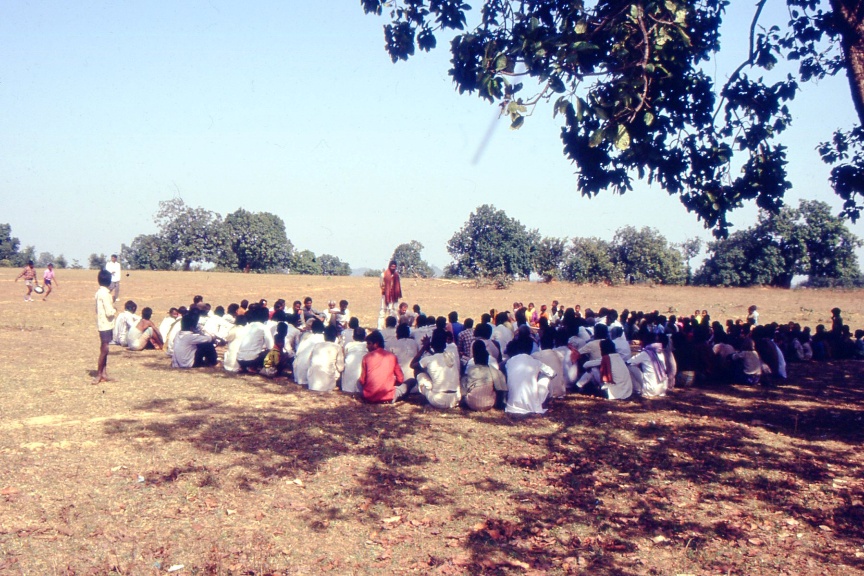
Shramjeevi Unnayan (People’s Up-lift ?) worked not far from the industrial city of Jamshedpur, in Southern Bihar (now in the State of Jharkhand). The area was remote and the villages scattered. Indian nightjars took off in the light of the jeep headlights as we drove down a dusty track in the dark to their HQ. Shramajeevi was led by Pranab Choudhury and his wife, Meena, who ran a project for women. Pranab was very much into experimentation regarding agriculture and income generation activities. There was an experimental demonstration farm and tree nursery. They were growing mulberry trees and raising silk-worms. There was a large shed without windows in which they grew a plethora of strangely shaped and colourful mushrooms. We sat in a village meeting one evening only yards from a security fence surrounding an enormous factory – or possibly a power station – which was illuminated like a football stadium. The village had no electricity supply. Presumably that’s why we were sitting by the factory lights.
We had two church partners in Calcutta, the capital of West Bengal – Cathedral Relief Services (CRS) and Calcutta Urban Service (CUS). The cathedral in question was St Paul’s. Calcutta was, until 1911, the capital of British India, having been estabished originally by the East India Company. The cathedral is an almost white, semi-gothic affair. What struck me more was its interior. It was brightly lit through its rows of clear arched windows, and without pillars. The high, shallow arch of the roof was festooned with ceiling fans on long metal poles that reached down to a height where the congregation would be able to feel their effect. The walls were covered with memorial tablets commemorating the British dead. Some had died not long after arriving, others on their way home. One had died even before he arrived, at the Cape of Good Hope.
During the Bangladesh Liberation War of 1971, which led to East Pakistan becoming the independent state of Bangladesh, an estimated 10 million refugees fled from the conflict zone over the border into India. Most went to the nearest city – Calcutta. The Reverend Canon Subir Biswas of St Paul’s Cathedral in Calcutta responded to the refugee crisis by founding the Cathedral Relief Service (CRS), which provided emergency aid, including food, clothing and mobile medical units. After the war, an estimated 1.5 million refugees stayed in India, a great proportion in Calcutta. CRS shifted its emphasis to supporting these people who lived in great poverty in the city’s slums, providing education, skills training and healthcare.
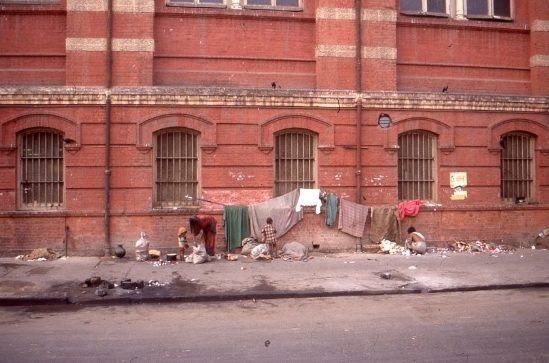
Calcutta street family
On my first visit to CRS I met the indomitable Ms Hazel Platts, who had worked in India as a missionary for thirty years. She was the Manager of CRS at that time, but she was about to step down and later she returned to the UK, presumably to retire. After that a Mr Biswas took over and I liaised with him.
Calcutta was a particular experience, with old colonial and modern buildings cheek by jowl. There were families living on the streets. There were slums. At dusk the city was filled with the smoke of numberless cooking fires. I went with CRS to visit a slum in which they were working. I must have shaken someone’s hand, perhaps a child, I awoke the next morning with conjunctivitis.
On my first couple of visits to Calcutta I stayed at a well-known guest house run by a couple of Anglo-Indian ladies I think. It had clearly been left behind from the Raj. The building was of a certain vintage. There were ‘bearers’ in uniform to serve breakfast. I then learnt, talking to a senior OXFAM local representative in India, that he been booked in to stay there but on arrival, seeing he was an Indian and not a Brit, they told him they were full. I stayed in a regular hotel after that.
CRS was run by the Reverend Das, a quietly spoken and dedicated man who was also a Parish priest in the city. CRS also worked in the slums and had been established in 1970.
Like the Church of Bangladesh, these partners were sensitive to their church/Christian identity and felt its limitations in terms of what kind of work they could do. They both concentrated on Health work, as per their origins, together with skills training and education. Had they not been church partners I might have proposed we stop supporting them. Community organization and awareness-building were not, as far as I could tell, among their strengths. However, quite apart from the political difficulties that might have arisen, they were addressing real needs and fulfilling their Christian duty to help the poor. Our duty was to help them do so.
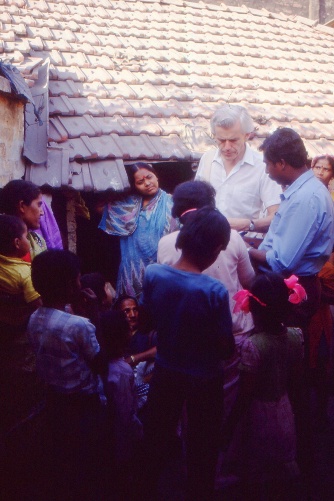
Michael Taylor with CUS
I arrived at CUS one time from Dhaka with a raging toothache. I had been applying clove oil but it was having none of it. My journey to Dhaka airport in an autorickshaw had been agony with every pothole. I asked Reverend Das to take me to a dentist. He took me to a backstreet dive where the ‘dentist’ gave me an injection to numb the pain and sent me on my way. I asked Reverend Das to take me to a better dentist. This gentleman, to my relief, was clearly of a superior class of practitioner. Faced with a foreigner, he was determined to approach the case with systematic thoroughness. I pointed out the tooth in question, but he began to inspect my teeth, one by one, starting from those furthest away. Finally, he got to the right one and said ‘Oh’ – he had seen the red-raw gum resulting from my overuse of the, undiluted, clove oil. I had an abscess. He must have drained it and then given me a prescription for antibiotics. In any case, the pain soon faded. However, on returning home, worrying that the first dentist might not even have had proper sterilization equipment for his needle, I had myself fully checked out, including for HIV. Calcutta was a centre of the disease at that time. I checked out clear.
The Khadi and Village Industry Society (KVIS) had been formed by a group of village women who had initially obtained funds from the Government Khadi and Village Industry Commission, hence the name. Anima Mondal was my key interlocuter, together with a man who they had got to help them at the beginning on the grounds that they needed someone who could speak English, and they needed a man.
Anima and a few of her colleagues made a very successful visit to the UK, talking to Christian Aid supporter groups about their history and work.
We travelled a lot in the KVIS vehicle. What I remember is that their driver could only do maximum speed and that Anima was constantly saying ‘Slow down, slow down’ – to no effect.
Should I even mention that one partner, who I will not identify, had a poster up of the most magnificently adorned and attractive young Indian bride ? The trouble was that it was posted on the inside of the loo door. Weird. The same partner once put me in a hotel which cost the equivalent of £95 a night. This was enormously more than I ever paid elsewhere. Which reminds me of another, more modest, hotel I once stayed at where the toilet in the attached bathroom stunk of sewage. I complained and someone came and poured a couple of bottles of Detol down the hole. But I think that was before I joined CA, so I won’t mention it.
ASTHA, based in Udaipur, Rajasthan, was led by Om and Ginny Shrivastava. Ginny was a Canadian ; Om an Indian. They ran a training and research centre and worked with nearby Adivasi communities. Rather than a fixed programme of work, ASTHA’s approach was to respond to the issues that arose from the women’s groups they had helped form. For example, tribal women customarily collected tendu or beedi leaves from the forest. Beedis are the hand-rolled leaf cigarettes popular all over India. This was seasonal work, but it was an important source of income. It was also very poorly paid. ASTHA, with the involvement of some social work students, first helped the women research and understand the wider economic and legal system surrounding the beedi leaf economy. The women sold the leaves to contractors, but the price was set by Forest Department officials, together with the contractors and other players, without the involvement of the collectors. The research revealed that the remuneration compared with the time taken to collect the leaves meant that the collectors were being paid below the legal minimum wage. Armed with this finding the women were able to gain a place on the price-setting committee and to avoid some of the middle-men by marketing the leaves themselves. Another issue which arose concerned the pawning of jewelry, a common practice to meet emergencies or the cost of weddings, for example, at extortionate, customary monthly interest rates. The decision was made to use the groups’ saving funds to redeem the jewelry. This proved a problem for some of the moneylenders as they’d already sold some of the items. They had assumed that the women would never have the means to claim their jewelry back. Even those who still had the jewelry were mightily discomfited as their previously reliable source of monthly income came to an end. The women’s groups emerged strengthened both economically and politically. I recommended that our Asia/Pacific journalist – Catherine Mathesson – should visit ASTHA. They were dripping with stories like these, perfect for explaining what Christian Aid and its partners were achieving.
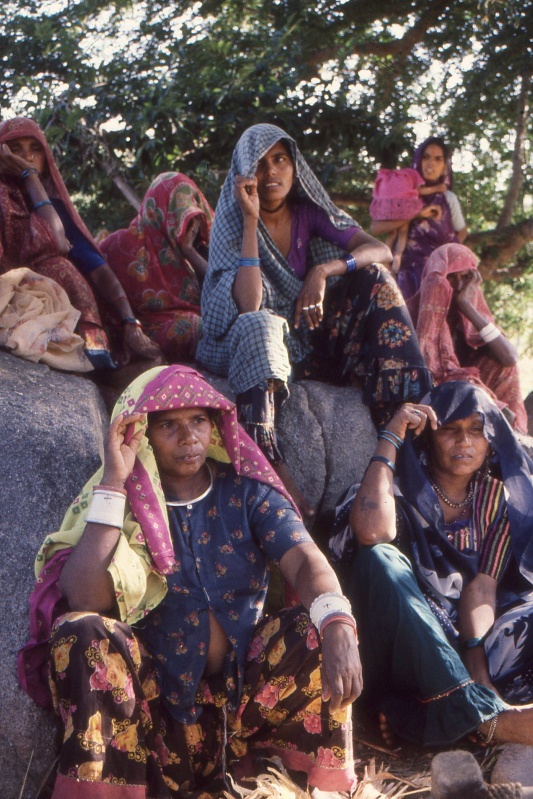
KASSAR TRUST (KT) was one of my favourite partners to visit – both because of where they were – in the Himalayas – and because Tim and Bulu – the sum total of the Trust’s staff – were so interesting to discuss things with, both work and personal. And their work was good too. Somehow, they had come to the attention of Major Michael at CASA and he had recommended them to Barry. Tim Rees was a geologist from the UK who had first gone to work in Japan – which was a story in itself – and then, on his way back to the UK, had bumped into Auroville, the international ashram on the east coast of India, and the teachings of Sri Aurobindo. He found Aurobino’s philosophy to his liking anddecided to stay. Bulu was born in Auroville. His parents were members of the ashram. They first began working together around the ashram, but then, for reasons I don’t recall, moved up North to Almora District and its mountains, forests and steep river valleys. Bulu was the social organizer, Tim the engineer and inventor. They and the groups – samithies – they helped form soon identified access to clean drinking water as a key issue, especially in summer months when the traditional springs dried to a trickle. In any case, these springs were open and were therefore muddied and polluted. Tim became expert in identifying places where water was present in the ground even in the absence of a spring and invented an enclosed infiltration well into which ground water collected, with a hand pump on top. He taught the samithy members both how to identify such sites and to construct the wells. Combined with water storage tanks and rainwater harvesting from house roofs, clean drinking water became available all year round.
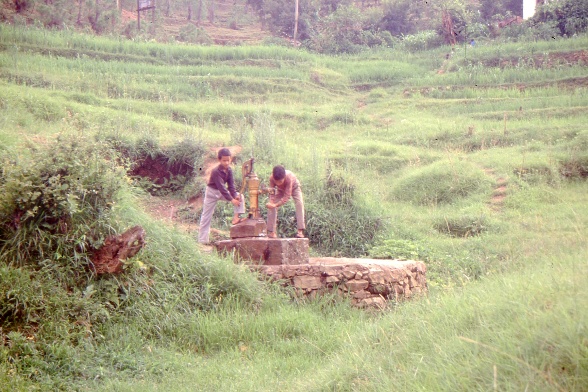
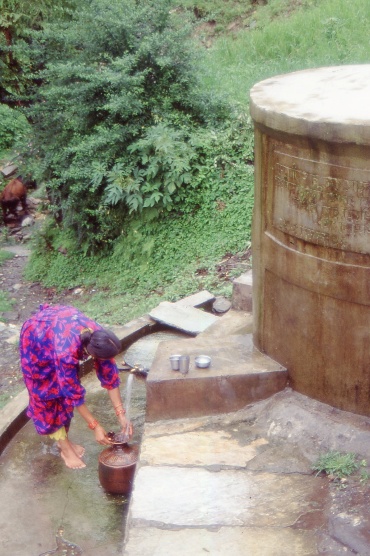
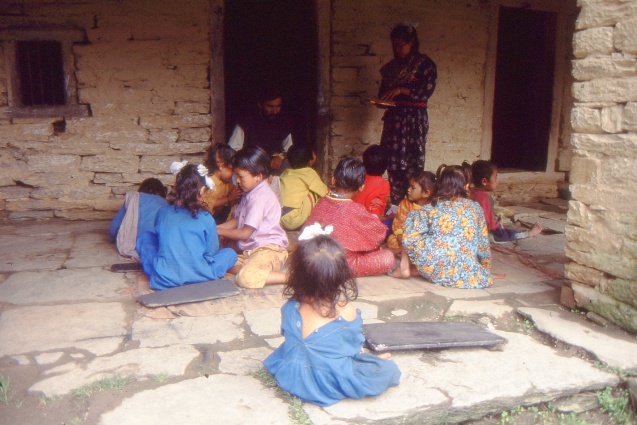
Meanwhile, when he wasn’t building wells, Bulu helped the women samithy members establish balwadis – nursery schools – and organized the training of local women to run them.
I have written elsewhere about a particular trip I made to KT and a visit to one of their most distant villages, a day and half’s walk beyond the end of the road – A Trek in the Himalayas.[10]
Bulu also made a very successful visit to the UK to talk to supporters about KT’s work.
My most exciting partner was Mukti Pratishtan (MP), who organised surprise raids on quarries, carpet factories and other such establishments, to free children forced to work as bonded labourers. Bonded child labour was illegal but common. Children were ‘bonded’ to their employer to pay back loans taken out by their parents. A form of slavery. MP freed the children, took cases to court, including the Supreme Court, and provided rehabilitation and education until the kids could be safely returned to their families.
When I first met them, they were led by the well-known Hindu social activist Swami Agnivesh, who had earlier founded Bandhua Mukti Morcha (the Bonded Labour Liberation Front). His co-worker was Kailash Satyarthi, who went on to create the Global March against Child Labour and the Rug Mark, which guaranteed no child labour in the making of oriental rugs and carpets. Christian Aid supported both these initiatives, together with Bread for the World from Germany. Kailash then went on to be awarded the Nobel Peace Prize in 2014, together with Malala Yousafzai, “for their struggle against the suppression of children and young people and for the right of all children to education.”
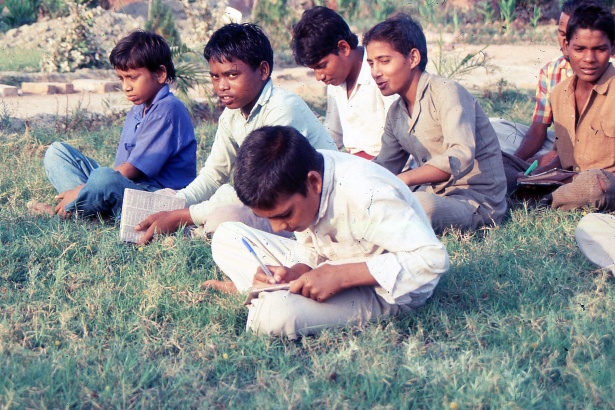
The Global March against Child Labour came to London, a small group of children – former child labourers – together with Kailash. We took them, by arrangement, to Whitehall, and assembled quietly opposite the entrance to Downing Street. Okay, we said, now you can start demonstrating. Banners were raised; fists were raised. Suddenly a great volume of angry and demanding voices was raised – a normal Indian-style protest in fact. We panicked and asked them to turn the volume down a bit lest the police constables opposite decided to move us on.
The Rug Mark initiative led to me getting my one and only letter in The Times. I was phoned up by a journalist and explained to him what it was all about. Unfortunately, being of a naïve and open disposition, I mentioned that the launch of the Rug Mark was only just being organised in time for its launch. Next thing you know, The Times prints an article ‘Drive to ban child labour makes Indian poor poorer’, saying the Rug Mark’s not reliable, and other negativities. A letter was sent – and published – rejecting the criticisms. I say ‘was sent’ because I certainly didn’t write it – clearly, I had done enough damage. I think our journalist colleague Eileen Maybin was the author.
When I worked for RDAS in Hyderabad, I got to know a local NGO – and the chap who founded it – which was funded both by Christian Aid and another major UK aid agency. Some years later I met him again in Hyderabad. He was no longer working for the NGO. The other agency had had a new Director and a change of policy. Instead of funding independent NGOs and their projects, they had decided to take them over. They must have made an offer to the NGO’s board it couldn’t refuse, and my friend had been ousted. I preferred Christian Aid’s partnership approach.
*
Policy Officer/Policy and Advocacy Officer
After eight years as Project Officer, there were changes in train at CA, including in the Asia-Pacific Team. I applied for the new Head of South Asia position, but my approach – to consult with the other team members before deciding future plans, which I had not had time to do – was not what was wanted. In any case, I was not in the right psychological space at that time and I was ready for a change. While it had been a privilege to support partners in their grass-roots work, it began to feel too distant from the coal face – which was a job for locals in any case – and even too much like fire-fighting than changing the structures which keep people poor. I now wanted to write about the things I had learnt from partners and add them to Christian Aid’s work aimed at influencing wider and higher levels of development thinking and action.
My chance came – on cue – when I was asked by our colleague Clive Robinson to write a paper on microcredit. I’m not sure why he wanted it, but it may have had something to do with the then forthcoming Microcredit Summit, which I soon became much engaged with. I wrote a paper based on my knowledge of community group savings and loans schemes with which I was familiar from India, and the more focused small group savings and loans approach which had been developed in Bangladesh, particularly by the Grameen (Village) Bank led by Dr Mohammed Yunus, but by then adopted by most Bangladeshi NGOs. I then submitted a more specific response to the Microcredit Summit Draft Declaration and Plan of Action which caught the attention of Sam Daley-Harris, who was at that time busy setting up the Summit, together with Dr Yunus and others. Sam invited me to speak at the opening session of the pre-summit preparatory gathering held in Washington DC in September 1996.
The opening was a huge plenary session in a vast auditorium. The promoters of the Summit, including Sam and Dr Yunus, were sat in a line on the stage. I was the last to speak. In a nutshell, while acknowledging the undoubted benefits of microcredit, I also argued its limitations and what else was required, especially to reach the poorest. All previous presentations had been only positive. However, I noticed as I spoke that I received frequent support from the audience at salient points. Nonetheless, I was sufficiently intimidated that I decided to stop before my last comment, feeling I had probably said enough. Sam thanked me – but then he must have known I would be somewhat critical. Dr Yunus was clearly unhappy and said so.
Happily, however, Sam invited me back for the Summit proper – in February 1997, in Washington again – even if not actually as a speaker. I was to be part of a panel at one of the Summit’s discussion group sessions. Unfortunately, no sooner had I arrived than I came down with a debilitating bout of ‘flu and was laid out in my room for the duration. Fortunately, my friends from GUP Bangladesh were also there and looked after me.
Later, one or other of my microcredit papers was used by the Open University as teaching material. I like to think that that meant they agreed with what I had written, but probably it just meant they liked to present both sides of the story.
As Project Officer it was a regular part of my job to request and fund project evaluations. As a Policy Officer, I was once involved in helping to conduct a project evaluation myself. A colleague from the Africa Desk asked me to join an evaluation team for a project in Ghana working with artisanal women fisherfolk in a cluster of coastal villages. The men caught the fish, but the women smoked and marketed them. This was my chance to put into practice ideas I had developed during my previous work with partners. The common practice was for a team of outsiders to visit, evaluate and write a report. But partners then often treated it more like an inspection than a learning opportunity, and often disagreed with the results. I argued that a member or two from the project should also be members of the evaluation team, to help at least to get the facts right, and hopefully to make the report more useful. Lydia, the head of the project, didn’t disagree, but when it came to it, although she came to the field with us, she did not ‘join’ the team – myself and two local evaluators. I also had the idea to stay in or nearby the villages for a few days to maximise our time there, but that didn’t work either as the others, reasonably, wanted to get back home each night. We therefore spent some hours each day commuting out and back from Accra. Still, the final product seemed to be acceptable.
I remember standing on the shore watching powered boats pulling traditional canoes and fishermen at pace, sweeping up sardines. I presume this was to some advantage to the fishermen. At the same time, however, industrial trawlers from Europe and elsewhere were also fishing along the Ghana coast, which were not welcome because they depleted the stocks on which the artisanal fisherfolk relied.
As mentioned above, among my partners as a Project Officer was Mukthi Pratisthan, led by Kailash Satyarthi. Therefore, I had some knowledge of child labour issues. The International Labour Organisation (ILO) was developing a Worst Forms of Child Labour Convention and the Delhi office of the UK Department for International Development (DFID) put out a call for a study to produce recommendations for future DFID child labour funding in India. I had no choice but to volunteer. CA, together with the Institute of Social Sciences in Delhi, got the contract – we would have been considerably cheaper than any of the other contenders. I became a consultant.
I worked with the enthusiastic and indefatigable Dr Dusmanta Kumar Giri. We travelled all over India visiting child labour experts and projects. We found ourselves very much on the same wavelength and produced a report which we thought was rather good and which DFID Delhi seemed to find satisfactory. Whether they ever followed any of its recommendations I couldn’t say. However, I had been involved – administratively – in an NHS consultancy some years before and I understood that consultants were, at that time, fashionable and necessary. Hopefully, it contributed to Christian Aid’s reputation with DFID. I’m not aware that Christian Aid was ever asked to conduct another study.
Our key conclusion was that all child labour must be abolished immediately and the children provided with an education. Unless it was stopped, yet more children would become sick and poverty-stricken adults and the cycle would continue. At the same time, the children’s parents must be supported so that they no longer relied on their children’s earnings. All this was in fact either law or government policy in India. That was fine until we attended an ILO Conference to promote the Convention hosted by the Government of Norway in Oslo, in October 1997. There we discovered that Save the Children, led by their Brazil team I think, did not want child labour abolished, at least, not for now. They were concerned that this would only drive the children’s families into greater poverty. Both points of view were argued. In the end, while the Convention required that action be taken to prohibit and eliminate slavery, including forced and bonded labour, trafficking and criminal and sexual exploitation, it sensibly left it to signatory countries to work out the details of how to go about it according to local circumstances. Happily, the Convention became one of the most rapidly signed-up to in the ILO’s history.
Clare Short was the UK Minister for International Development at the time and I sat in a meeting with her in Oslo where the discussion somehow turned to the subject of food security. She held the view that countries could always buy the food they needed from international markets. This was the neoliberal wisdom at the time. I piped up that it wasn’t so for many developing countries and their rural poor who relied mostly on their own food production.
I had come to this understanding through my work on Sustainable Agriculture and with the UK Food Group (UKFG). Many of Christian Aid’s partners were working with ‘small farmers’ – i.e. peasant farmers, men and women – who made their livelihood producing food for local markets and for their own consumption – the bulk of the world’s rural poor in fact. Pressures to adopt a more commercial and Green Revolution agriculture – costly seeds, fertilisers and other agrochemicals; aimed at international, markets – had been tried and too often failed. Peasant agriculturalists needed more local, less costly and more sustainable approaches, and many NGOs were involved in developing and supporting such efforts : water storage and contour bunding, for example; seed-saving, seed-storage and exchange; making and using compost and growing green manures; intercropping a variety of food plants instead of more pest-vulnerable mono-cropping; using tree nurseries and tree planting for shelter, shade, fodder and fruit; drip irrigation using clay pots; twigs in paddy-fields as perches for insect-eating birds. Some of these methods were more or less traditional, some new and experimental.
In 2002 I wrote a report titled Forgotten Farmers: small farmers, trade and sustainable agriculture[11] as a contribution to Christian Aid’s ongoing Trade Campaign and then another version of the same titled Forgotten farmers at the WSSD (World Summit for Sustainable Development). Gratifyingly, these reports were subsequently referred to by others writing on the subject and reproduced in other publications. We used the latter at the FAO World Food Summit + 5, and then again at the WSSD in Johannesburg, to lobby for proper consideration of the needs of small farmers in the food-security/trade/sustainability debates. This argued that the World Trade Organisation’s insistence on liberalizing food markets in developing countries undermined food security for the rural poor.
The report also argued – briefly; I should have said more – the importance of Food Sovereignty. I had been introduced to the notion of Food Sovereignty through my work with the UK Food Group (UKFG). The UKFG was formed in 1986 when Clive Robinson at Christian Aid brought together people working in three sectors which, at that time, were rarely connected: overseas development, environment and farming. This was particularly in the context of the debate on the EU Common Agricultural Policy and major initiatives on food at the FAO. I inherited Clive’s role as manager of the UKFG’s funding, which came through CA. The UKFG was a wonderful collection of disparate organisations ranging from those concerned primarily with UK farming (Agricultural Christian Fellowship; Scottish Crofting Federation), through bananas (Banana Link) and baby milk (Baby Milk Action), to major UK development and environment NGOs.[12] I loved my involvement with the members of the UKFG. It got me beyond Christian Aid and into a wider world of other dedicated and enthusiastic individuals and organisations trying to change things for the better. Above all, there was Patrick Mulvaney from ITDG/ Practical Action. He was a one-person power-house for food sovereignty, involved in a range of UN and NGO initiatives on food and agriculture, including the international peasant farmer movement Via Campasina :
‘Food sovereignty is the right of peoples to define their own agricultural and food policies, to protect and regulate domestic agricultural production and trade in order to achieve sustainable development objectives, to determine the extent to which they want to be self-reliant, and to restrict the dumping of products on their markets. Food sovereignty does not negate trade, but rather, it promotes the formulation of trade policies and practice that serve the rights of people to safe, healthy and ecologically sustainable production.’[13]
At the 2007 Forum for Food Sovereignty held in Mali, 500 delegates from more than 80 countries adopted the “Declaration of Nyéléni” which supports and advocates the model, which has since been adopted by a number of countries as official policy.
Another good friend I made through the UKFG was Christopher Jones of the Agricultural Christian Fellowship (ACF). He was a farmer himself and he also had a good knowledge of developing country farming. ACF had been founded to help farmers suffering from the common burdens of isolation, financial struggle and, often, depression. Christopher was always and unfailingly thoughtful, positive and amusing.
Another area of work I got into was the issue of Genetically Modified Crops. Among other things, I wrote a Policy Briefing entitled Could GM crops benefit the poor? – The case of GM Vitamin-A rice (2000). This proved not to be as popular as Forgotten Farmers, but it did have the distinction of receiving a thorough slagging off in an article by some academic ‘Golden Rice’ supporters under the banner of Scientists for Labour. That article is still available on the internet. In fact, the GM issue proved one of most controversial topics we got involved in.
GM foods were a major public issue in the UK at the time, with headlines of ‘Frankenfood’ in the popular press. The Christian Aid Media Team chose to write the customary Christian Aid week report on GM crops as they related to developing countries. The report – Selling Suicide – farming, false promises and genetic engineering (1999) – was written by Andrew Simms, an ever creative and informed colleague who later went on to yet greater things at the New Economics Foundation. I thought it would be helpful to write a briefing particularly for Christian Aid staff to give them a potted introduction to GM and our concerns.
I then got invited, partly through the UKFG, to a one-day mediated discussion between those in favour of GM and those against, mostly industry I think on one side and development and environmental NGOs on the other. What with me being by nature a conciliatory individual, I felt during the course of the day that we were finding a way forward which both sides might find acceptable. I was wrong. Ultimately, certain NGO voices rejected the proposals. Industry could not be trusted. Opposition should continue. At the end of the day the dispute remained solid.
I was also invited to a Consultation hosted by St George’s House, which is located within the precincts of Windsor Castle. I stayed in a flat above the main entrance. On one of the windows overlooking the castle yard some initials had been crudely scratched, apparently ‘AB ‘ – Anne Boleyn herself, while waiting to be executed. The policeman at the gate entertained us with his tale of American tourists asking ‘Why did they build the castle under the flight path to Heathrow ?’
This Consultation may or may not have been on GM – both my notes and my recollection let me down here – but GM was certainly discussed. It was at this consultation that I first met Peter Melchett, then Director of Greenpeace I think, soon to join the Soil Association. I am pretty sure we discussed the then hot issue of ‘Golden Rice’. Indeed, this was the topic of the day among the development and environmental NGOs and everyone was against it. I was moved to write my paper on Vitamin-A rice.
This may have been the paper I shared in draft with Dr Donald Bruce, a scientist and colleague from the Scottish Churches. He was not at all happy with it and wanted me to tone our opposition down. In my view, he wanted me to eviscerate it. I asked Clive what to do. He said, change it. I ignored him. One problem was that I was the only person at Christian Aid who had any in-depth knowledge of the subject. Another was that we did not, at that time, have proper systems in place for making a collective decision on what position we should take and what we should publish. As far as GM was concerned, I was a one-man band in Christian Aid (Andrew Simms had moved on to other topics) and my understanding was formed mostly through discussions with UKFG colleagues.
We published. I was then somewhere between flabbergasted and perplexed to find that no one else published a word about it. Fortunately for me, the Scientists for Labour article was not picked up by anyone and the issue just remained bubbling away without resolution. And so it has remained. Golden rice has since been improved, answering some criticisms, and has been made available free to small farmers. As far as I can make out, it has not in itself proved a Trojan Horse, but nor has it spread to become an answer to the problem of Vitamin-A deficiency.
I attended a WCC meeting on GM in Geneva. Donald was also there, as was Vandana Shiva from India who was a noted opponent of GM crops. In fact everyone was against, except Donald. At a certain point he complained – justifiably – that he was being treated as if he was an enemy. The tone was adjusted, but his arguments remained a lone voice.
CA’s Chair, Bishop John Gladwin, received a letter of complaint about our position on GM crops and Vitamin-A rice from Lord Taverne, founder of Sense About Science. I drafted a reply and, although the public debate continued, I don’t think we heard anything more from Lord Taverne. I recall another senior scientist saying to me as he left a meeting at Christian Aid that if we maintained our opposition to GM crops he would have to stop supporting us.
The GM issue continued for some time. I wrote another paper on Christian Aid’s concerns with GM crops in 2002, and an update in 2004.
What do I think now ? I think those NGO voices were, at that time, right. Give an inch, take a mile. In any case, the fundamental issues remained. The patented technology would not benefit developing country poor farmers and would only strengthen the dominance of agribusiness; the environmental risks remained; the science was disputed. The differences of opinion were genuine. Many scientists believed that GM would feed the world; development NGOs thought it would not. GM crops have since become widespread in large parts of the world – although most still involve only two characteristics – herbicide resistance and pest resistance. Both of these require buying agro-chemical inputs from the firms which provide the seeds. The range of useful modifications promised at that time have been slow in coming. Meanwhile, what I think the collective opposition achieved was to apply the brakes to a technology which industry and many scientists were dangerously over-enthusiastic about. In any case, GM crops have certainly not managed to feed the world. One in ten people were reported to be undernourished in 2025, mostly in sub-Saharan Africa and South Asia.
In 1996 it was decided that the Christian Aid Week Report would be about prawns. A number of partners, particularly in India and Bangladesh, had been raising the issue of the invasion of prawn farms along the coast. Businesses were moving into coastal areas and digging huge ponds, filled with sea-water, in which to grow prawns. Local artisanal fisherfolk could not easily reach the shore and their boats, the prawn farms were security-fenced and guarded; the sea-water was salinating surrounding fields owned by small farmers; wild prawns were being caught for their eggs and declining in numbers; sea fish were being driven away by untreated effluent discharges leading to declining catches; village wells were being polluted, cemeteries dug up; village women were being hassled by the guards; protective tree belts were cut down. The prawn industry already had a history of ‘slash and burn’ in coastal areas in South America and elsewhere. The intensive stocking of the ponds meant that after a few years disease would arrive and decimate the prawns. The farms would be abandoned and the companies move elsewhere, leaving dead ponds and poisoned fields and wells behind them. In India, most of the prawn farms were illegally located close to the shore or on agricultural land.
Eileen Maybin, a journalist colleague, and I were deputed to research the issue and write the report. We visited coastal Andhra Pradesh and Tamil Nadu hosted by Christian Aid partner PREPARE, led by Jacob Dhamaraj. Together with another NGO, they had already obtained an interim stay order from the Supreme Court against any new farms. However, there were powerful interests behind the industry and the export of prawns was seen by some as a major economic opportunity for the country.
PREPARE took us to farms and affected villages where we spoke to the villagers and recorded their stories and gathered more information from the local NGOs working there. We discovered that it was not only local fisherfolk and farmers that were suffering. Some local landowners had been tempted in to trying their luck only to now have their production collapse and to find themselves in substantial debt.
On one occasion we accompanied our guide and met a couple of prawn farmers. We pretended that we were looking for a prawn farming opportunity for ourselves. A great deal of interesting information was obtained. In Bangladesh we were hosted by our partner Nijera Kori in the far South of the country. In both cases, demonstrations against the farms had been organized and vociferous.
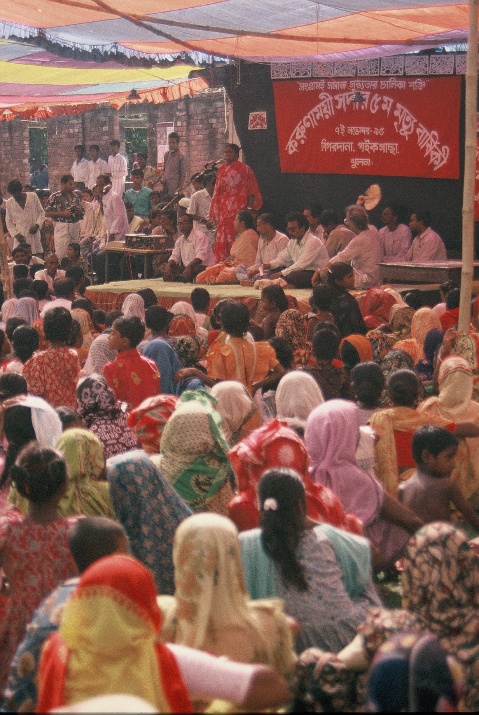
Nijera Kori
Our report, After the Prawn Rush: the human and environmental costs of commercial prawn farming (1996), led to a meeting with the main UK prawn-importers at Christian Aid – hosted by Christian Aid’s friend John Montagu, the Earl of Sandwich – but to what effect I don’t know. Partners appreciated our involvement, but, having started, perhaps we should have put more resources into continuing to work on the issue.
Unfortunately, Eileen caught some sort of bug during our trip and was laid up for months afterwards.
I also visited Thailand to investigate prawn farming there, at the invitation of the Mangrove Action Project. We found some local pond owners pouring Fairy Liquid into their ponds on the grounds that detergent was a cleaning product and it would therefore help clean up the pond water and prevent disease. Otherwise, it was a similar picture to what we’d found in India and Bangladesh. This was way down South on the East coast. Fortunately, not all the West coast, only a few miles away, was suitable for prawn farming. I was able to spend a night on the West coast where great columns of rock rise from the shallow sea, more or less vertical sided, with a green top-knot of vegetation. I climbed to the top of one by means of an iron ladder attached to the rock, perhaps a hundred feet. I wonder if Christian Aid’s travel insurance covered that sort of thing ?
While most of my Policy Team colleagues were focussed on Christian Aid’s Trade Campaign, which continued over a period of years, I was available to respond to policy emergencies – animal welfare, for example. The Fundraising Team had put out a piece which featured a photo of a woman who had received a micro-loan to buy some chickens. Unfortunately, the chickens were visibly kept in cages. An animal rights NGO objected, understandably. I hurriedly prepared Animal Welfare Guidelines for Christian Aid’s Project/Programme Officers. Some colleagues were much in sympathy; others were unimpressed that chickens should be put before people struggling to make a living.
In May 1999 the Christian Aid Week report was titled Unnatural Disasters, written by Andrew Pendleton, I think, another of Christian Aid’s journalists, who later joined the Policy Team – now re-named the Global Advocacy Department. He later became my boss, but we still got on well. This was how we began to get involved in the issue of climate change. Andrew and I then wrote a paper Global warming, unnatural disasters and the world’s poor (2000). Of course, by then, all the development and environment agencies were working on the topic.
I then attended the Sixth Conference of the Parties to the UN Framework Convention on Climate Change in The Hague as part of the WCC delegation. A major topic of the conference was what should count towards countries’ carbon sinks – that is, how much carbon were they going to sequester (a quite separate issue from how much they produced). Australia argued that its extensive grasslands – dry, arid, sparse – should count. The next morning every table in the canteen had on it a small glass of leaves of grass with the label ‘Australian carbon sink’ beside it. The WCC also began lobbying on climate change and I represented Christian Aid at a WCC Consultation on Solidarity with Victims of Climate Change, in January 2002. In fact, I was involved in a number of meetings on the subject both in the UK and abroad, but my notes let me down again, and I cannot recall the details of what, when and where. However, I am pleased to say that climate change was continued as a major campaigning issue at CA, with a senior management team member leading.
I also cannot remember the what and when of the two times I had the privilege of attending meetings at the UN in New York. They were on one or other of the issues above. I do remember that on one visit I stayed at the quaintly named, and reasonably priced, Pickwick Hotel. I also remember the UN canteen – a wonderful layout of buffet food for lunch each day. In those days I could still stay awake after a good lunch. The main point was, however, that I felt honoured to be at the centre of the world’s attempts to get on with each other and to tackle poverty and inequality.
In 1999 I researched and wrote – with contributions from others[14]– a somewhat different report. It dealt not only with poverty in developing countries but also with poverty in the UK. Local lives and livelihoods in a global economy (1999) was a joint publication by Christian Aid and Church Action on Poverty (CAP). What happened was that CAP had published a joint report on UK poverty with OXFAM, which had gained some press attention. Michael Taylor, our Director, was not happy. He called Nial Cooper, the CAP Director, in and it was agreed at once that Christian Aid and CAP would produce a joint report on poverty. I was appointed to produce it. I researched some of the UK side of it, with guidance from CAP, visiting projects in Glasgow, Thornaby (near Middlesborough), Manchester, Preston and South Wales. There was good work going on and plenty of community organising. However, the visits were mostly too brief and only some of the projects appeared in the report. I’m not aware that the report had any great impact either. However, I recall a tale and an incident which impressed themselves upon me. In South Wales I visited an isolated council estate utterly blighted by long-term unemployment. When a family moved out, neighbours dropped in the same night to remove the radiators to sell as scrap. Local enterprise. In Preston I was hosted for a day by a couple with young children who were active in a community project. We were at their home at lunchtime. I was offered lunch. I accepted. When our plates appeared, I realised that I had made the wrong call. The amount of food on our plates was markedly small. As you can see, I have never forgotten.[15]
After the fall of the Berlin wall in 1989, the West began to crow. As the USSR disintegrated, Frances Fukuyama’s ‘end of history’ claim[16] became the triumphant boast of neo-liberal capitalism. I recall a period where we were quite demoralised after all our calling for the World Bank, the IMF, the WTO and the UK Government to reform their policies in favour of the poor. It didn’t last long. Neo-liberal business as usual – possibly more so – continued and it soon became clear that the same issues of structural adjustment programmes, developing country debt, trade rules, and failures of the developed world to meet its commitments on environmental agreements, including climate change, remained to be sorted.
My most exciting contribution to Christian Aid’s campaigning work was to ride a horse while being dressed up as one of the four horsemen of the apocalypse. This stunt was part of the debt campaign, I think. We hired horses from a riding-stables in Hyde Park and rode to Downing Street to deliver our message to the Chancellor, though we horse-persons and our horses stayed outside the gates. On the way there, we were paused for traffic lights in Parliament Square. I suddenly noticed that my steel stirrup was an inch away from the paintwork of a shiny black Bentley – unless it was a Roller. Fortunately the horses were bomb-proof and stood quite still. On the way back it was obviously customary for the horses to have a gallop down one of the Hyde Park paths. Off we went. As we approached the end of the path I saw that there was there were two pedestrians. I applied the brakes. There was no effect. I pulled harder. Still no effect. Fortunately, the horse stopped itself, its nose a couple of feet from two immobilised American tourists. I apologised.
As part of my small farmers and sustainable agriculture research I made a visit to Christian Aid partners in Kenya and Tanzania. Having previously been involved almost entirely with South Asia, Africa was a new adventure for me. I arrived at Dar es Salaam airport and wondered where everybody was. I don’t mean that I expected anyone to be there to meet me, I just mean that there was no great wall of taxi drivers, rickshaw-wallahs and multitudinous others to push through.
In Tanzania I visited the Uluguru Agricultural Development Project (UMADEP) in the Uluguru mountains and DCT in Chilonwa, not far from the capital city of Dodoma. The green revolution never spread so widely in sub-Saharan Africa as in Asia and the focus of both of these projects was on developing new methods using mostly local resources to improve the generally poor performing traditional agriculture. Given that 84% of the population of Tanzania were engaged in agriculture, such projects were clearly required.
Talking to the farmers, both men and women, I was struck by the great range of vegetables and fruits they grew, both for subsistence and for the local market. In fact, this is typical of traditional peasant farming across the world. It does not do to rely on only a few, or a single, cash crop when production is unpredictable and precarious. The introduction of home compost-making, terracing, intercropping row-planting and other simple innovations had substantially increased production so that shifting cultivation was usually no longer necessary. A major problem for the hill farmers was marketing. Transport links were poor, market prices were low and they often had to sell to middlemen. The main problem for farmers in Chilonwa, on the plains, was drought, which composting helped to combat, but insufficiently. In both areas people had to go and work elsewhere when their food supplies ran out, taking them away from cultivating their own land.
A number of the farmers we spoke to in Chilonwa mentioned that they had used modern, High Yielding Variety seeds of millet and sorghum, but that they were then feasted upon by wild birds. The plants matured too soon, before the wild grasses and other seeds were available for the birds, unlike the traditional varieties. They also complained about monkeys and wild pigs. In the hills, while monkeys were a problem, wild pigs had been eliminated. In fact, they said, there were few wild mammals left in the area. This was, no doubt, the result not only of elimination but also of widespread deforestation. I like wild animals and when we happened to pass the entrance to a wildlife reserve I said to my driver, let’s go in. Having gone in, I said, let’s stay the night. A Masai warrior, with spear in hand, accompanied us to our accommodation. It was dark by then and a leopard had been spotted nearby. We slept in a fully equipped canvas tent placed on a wooden platform some ten feet above the ground. Throughout the night lions quarreled all around our platform. In the morning, they had gone, replaced by grazing elephants.
In Kenya I was taken to see where flowers were being grown along the shores of a lake. The flowers were for export as cut flowers to foreign markets. In front of the farms, away from the lake, there was an entrance to a wildlife reserve – a concrete arch, with gates. We drove in and stopped only a few yards inside. We didn’t need to go any further; the animals had come to see us. Zebras, gazelles and giraffes had come to drink from a trough. They used to drink from the lake, but now that they could no longer reach it, they had been provided with a trough.
Another African adventure was a visit to Burkina Faso in West Africa accompanying a small party including two British livestock farmers, led by Louise Orton of the West Africa Team. We went to visit traditional cattle herders in the North of the country. Cattle count both as social and economic capital, as well as a means of earning cash by selling them in the market. The herders faced drought leading to lack of fodder and the closure of earlier government fodder and veterinary support programmes. At the same time they could not get a sufficient price in the market. This was partly due to conflict in next-door Cote d’Ivoir, one of their major markets, and to currency fluctuations. However, it was also because of foreign imports – frozen beef was arriving from Argentina, South Africa and Europe, often subsidized, and undercutting local production costs. A union of herder groups had been formed which had had some success lobbying the government, but the government was squeezed by the IMF and structural adjustment. Nonetheless, the groups and the union had benefited the often illiterate and uninformed herders.
We visited in March, in Burkina Faso’s dry season. The North is in the Sahel, on the edge of the Sahara. The countryside was dry, the grass between sparse and nothing and the thorn trees were festooned with ripped and ragged black plastic bin-bags. We walked to a wide and shallow dry lake bed where groups of cattle were gathered around circular troughs, each with a small, hand-dug well beside it. Having drunk, the cattle moved off into the surrounding scrub to graze. We drove on to a sand dune and to the village of Menegou, where we stayed the night very comfortably in huts specially equipped with cots. The sand dune was four or five square kilometers in extent and had been there for decades, only slowly moving across the plains. There were a number of small settlements on the dune and well-established trees and other vegetation. Camels came and went.
We must have spent a night in Gorum Gorum, Burkina Faso’s major market town for agricultural products, including beef. My notes tell me that we left the town mid-morning, heading South, and after about twenty kilometers, turned around and returned. This was because a motorcyclist had flagged us down and reported that bandits had robbed a bus and stolen a motorbike ahead of us. Our three vehicles, a Land-Rover taxi packed with passengers within and on top, and a portly gentleman on a moped, turned round and fled. Our driver chased behind the moped all the way. The rider drove like a lunatic, his back wheel threatening to slip from beneath his considerable rear-end at each dusty bump in the road. It was clear to me that he feared we might be the bandits !
*
When I joined Christian Aid in 1988 we occupied three floors of Inter-Church House, beside Waterloo Station. The British Council of Churches (BCC) occupied another. (We shared the basement, I believe). We were a medium/modest sized organisation where one soon got to know colleagues in the building and at least some of the Area Secretaries distributed throughout the UK and Ireland. I immediately felt part of a family committed to the cause. Over the next years, a combination of repeated natural/unnatural disasters and the willingness of the UK Government and the EU to provide funds to and through NGO donors caused Christian Aid’s income to grow substantially. The BCC[18] was persuaded to move out; the previously multi-officed floors were made open plan; the IT department expanded enormously. HR too. It became impossible to know everyone – despite our residential staff conferences. On the other hand, what I never felt was a change in commitment. The family was bigger, but the focus was the same.
This, I realised afterwards, had given me a misleading view of the nature of organisations in general. Many Christian Aid admin staff were overqualified for the jobs they did; not every employee of an organisation might be as dedicated to the cause; not everyone need be so friendly, mostly. In fact, not everyone had my positive experience. I recall being shocked when one colleague, who had been seconded from another organisation, said he’d never been in such a conflictual group – although he was talking about the particular team he worked with rather than of Christian Aid as a whole.
*
I left Christian Aid at the end of 2004, after a little over sixteen years. On the one hand, Christian Aid had been my life, on the other, I was tired. I think I was partly tired like those in the caring professions are known to become tired. We all cared of course. I had contributed what I could. Time to rest. In any case, I had probably been at Christian Aid long enough. I began to groan when the same internal issues came round yet again and I found what I enjoyed most was working outside Christian Aid – with the UKFG and its members and with the WCC. Also, policy and advocacy at Christian Aid was moving on. My contribution to policy had been largely on the basis of my partner and project experience and my particular interest in matters environmental. Christian Aid policy and campaigning was focussed on economic and trade issues which I was not qualified to comment upon.
After leaving, I took up two particular activities which struck me as ironically amusing. After years of supporting local NGOs and communities to get organised and be politically active, I became a Parish Councillor. That is, I came face to face with opposition, bureaucracy, obduracy and self-interest. Fortunately, I enjoyed it. Secondly, after years of working on sustainable agriculture and the situation of peasant farmers, I became an agricultural labourer. I took to helping a farmer friend look after his herd of cows and with making hay – although there was nothing in his approach which could remotely be considered sustainable. It was – and remains – a learning experience anyway.
As for CA, my sub-conscious seems only recently to have accepted that I have left. For some years I have been regularly dreaming that I still go to the office daily. The problem is, I don’t get paid anymore. I know I have left, but I also know the Director wants me to do another particular piece of work – we have discussed it – and it’s costing me a fortune commuting in every day. But I can’t find my manager to discuss the situation. However, in my last dream, not long ago, there was no longer a desk for me to sit at. I got the message, I was no longer required. I had left. I am now hoping that my subconscious has, at last, settled the matter to its satisfaction.
The dreams are an expression of a quiet regret that I could not continue at Christian Aid and do more, but my time was up. I look back on what I did do and what I did achieve both as Project Officer and as a Policy Officer, with satisfaction. I have also been happy with what I have done since. But still, I miss my partners and friends, my colleagues at CA, in the UKFG, from the other ecumenical donors in Europe. I have kept up with a few; some of us meet up occasionally. That has to do.
***
24.03.26
- See: www. https://bundellbros.co.uk/sirumalai/ ↑
- There was a computer in the basement with terminals around the building which could be used for word processing. I gave it a go, but soon gave it up. I was not unfamiliar with such arrangements, but this system was unworkable. Liz was far more efficient. ↑
- Some years later, I went to Africa. Luxury ! Our Africa Team colleagues had been travelling, I realized, with hardly a time zone to worry about. ↑
- A professor of sociology, Dr Park Kyung Seo served the WCC as its Asia Secretary from 1982 to 1999. He coordinated WCC’s relations with the Christian Conference of Asia. He was also an internationally recognised champion of human rights. He was also, always, fun ! ↑
- https://nijerakori.org What Nijera Kori Stands For ↑
- I was informed by a UK ODA rep that our partner Kumudini (see below) had been sanctioned £50,000 post-flood rehabilitation funds for building 500 houses, only they probably didn’t know yet. It had been arranged by the British High Commissioner’s wife. ↑
- https://www.kumudini.org.bd ↑
- As it happened, I had also applied for Leo’s job earlier and I had been asked to stand by in case Leo did not get a work visa. The policy at the time was to try and recruit Project Officers in particular from Southern partners. A good policy. I took it on the chin. However, when another post came up for a Project Officer for Sri Lanka, I wasn’t even called for interview. That was worrying. Fortunately, after some months, I then got the North India and Bangladesh job. ↑
- See : Jungle – and the English countryside, https://bundellbros.co.uk/birdswildlifeplaces/jungle/
- https://bundellbros.co.uk/birdswildlifeplaces/a-trek-in-the-himalayas/ ↑
- With a contribution from my colleague and office-mate at the time, Jenny Richmond. ↑
- Members of the UK Food Group have included, over the years: ACORD, Action Against Hunger, Action Aid, Agricultural Christian Fellowship, Baby Milk Action, CAFOD, CAWR (Centre for Agroecology, Water and Resilience, Coventry University), Centre for Food Policy (City University, London), Christian Aid, Community Food Growers Network, Compassion in World Farming, Concern Universal, Concern Worldwide, Consumers International, EcoNexus, Excellent Development, Farms not factories, Find Your Feet, Friends of the Earth (England, Wales and Northern Ireland), Gaia Foundation, Garden Africa, Garden Organic, Global Justice Now, Global Witness, International Institute for Environment and Development, Landworkers’ Alliance (UK chapter of La Via Campesina), Methodist Relief and Development Fund, nef (New Economics Foundation), Oxfam GB, Permaculture Association, Pesticides Action Network UK, Pig Business, Practical Action/ITDG, Progressio/CIIR, Results UK, Save the Children UK, Scottish Crofting Federation, Self Help Africa, Send a Cow, Soil Association, Susila Dharma, Tearfund, The Brooke, Tree Aid, War on Want, Women’s Environmental Network, World Family. Observers: Food Ethics Council, Greenpeace, Royal Society for the Protection of Birds, Sustain: the Alliance for Better Food and Farming. ↑
- https://viacampesina.org/en/2001/11/statement-network-qour-world-is-not-for-saleq-owinfs/ ↑
- Nic Francis, Domingos Armani and Marcus Arruda. ↑
- ↑
- The End of History and the Last Man (1992) announced the triumph of liberal democracy and the arrival of a post-ideological world. ↑
- The Guardian 25.06.98 ↑
- By then the Churches Together in Britain and Ireland (CTBI) ↑